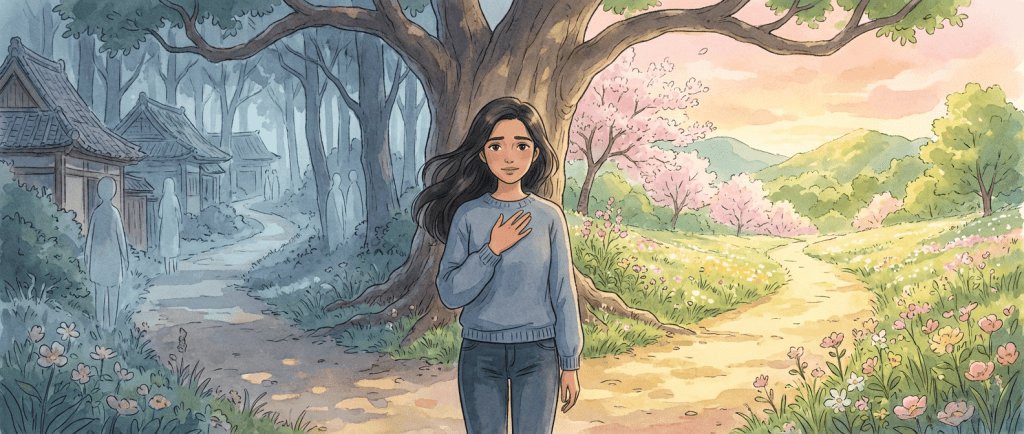
I have had depression since I was a teenager. This is something I don’t hide anymore.
I used to.
I was always made to feel like having a mental health problem was something shameful… like I was broken.
My depression, in my opinion, stemmed from my toxic family. I might have been prone to depression, but my environment was the trigger that aggravated it to the point where I was deeply unhappy with my life… and at times, I wished to end it.
I was lonely.
I didn’t have anyone to vent to.
No one to share my worries and fears with.
No one to laugh with.
No one I felt I could rely on to love me unconditionally.
That loneliness became the foundation of my depression.
And I worked through it… alone.
For some reason, in Asian culture, any sort of issue a person has—whether mental, physical, or emotional—if you are not “perfect,” you are made to feel like an outcast.
Like you need to be fixed.
Or kept at a distance.
I have seen both sides.
When I was “perfect”… and when I wasn’t.
Growing up, I was the perfect girl. Fair, pretty, and born in the UK. I was adored by everyone, both in the UK and in India. I was shown off, told I was beautiful, and paraded around like a doll.
But when I developed eczema, everything changed.
I was glared at.
People avoided me.
I was pitied.
And that shift… it stays with you.
I don’t know why, in the South Asian community, we treat each other like this. Nothing hurts more than the people who are supposed to be your support system—your tribe, your community—the ones who should lift you up…
being the ones who bring you down.
I can’t even remember how many times my own extended family made me feel awful and unwanted.
And that only added to my depression.
What made it worse wasn’t just what I was going through…
It was the silence around it.
No one talked about mental health.
No one asked if I was okay.
And I didn’t feel like I was allowed to speak.
So I stayed quiet.
And over time, that silence turned into shame.
I started to believe the narrative.
That something was wrong with me.
That I was weak.
That I had to hide parts of myself to be accepted.
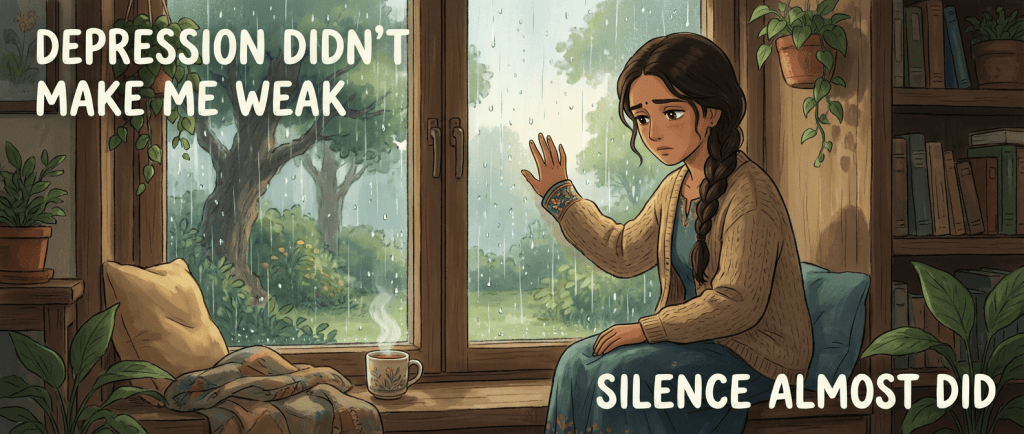
But depression didn’t make me weak.
Silence did.
Silence is what kept me trapped in my own thoughts.
Silence is what made me feel alone, even when I was surrounded by people.
Silence is what stopped me from asking for help when I needed it the most.
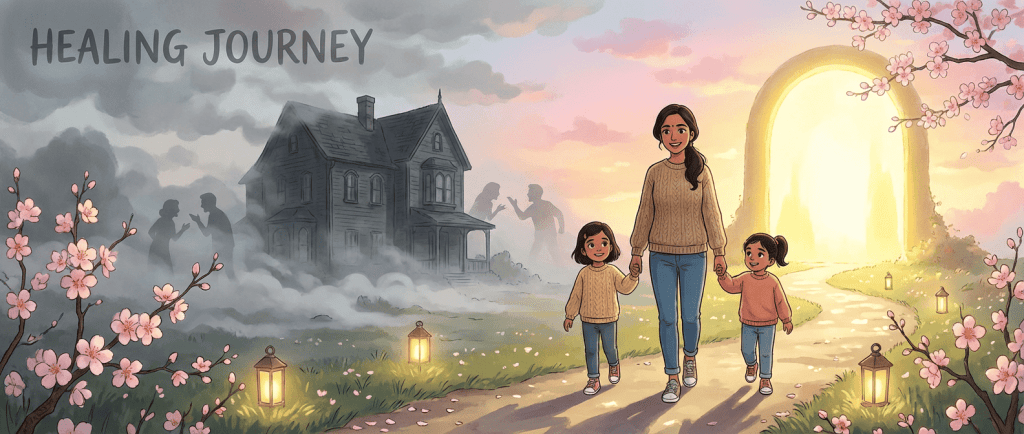
Things are different for me now… especially as a mum.
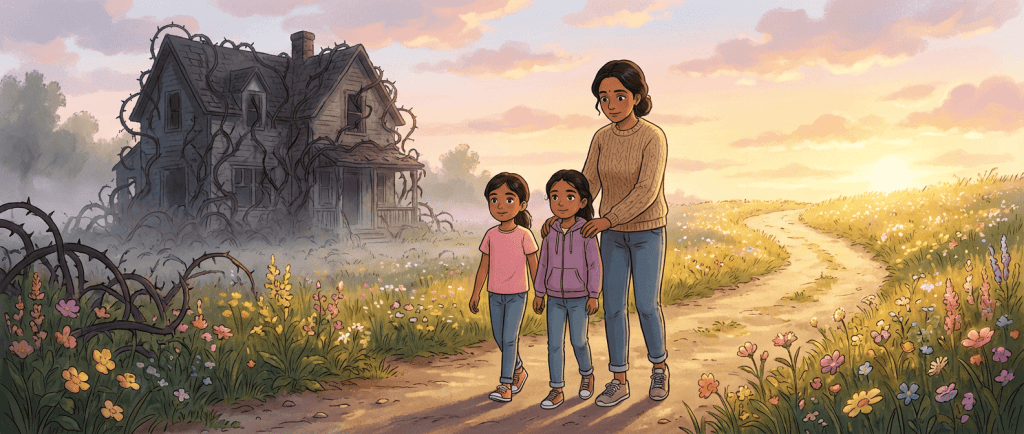
Thankfully, neither Jiya nor Maanvi have struggled with depression. Maanvi did experience anxiety when she was younger. She would get so overwhelmed by change—like a new class or a new teacher—that she would physically be sick.
But over the years, she has grown through it.
She’s gone on overnight school trips, handled big changes like moving from primary to secondary school, and she’s thriving. She’s involved in school plays, part of the music club, the drama club—and honestly, she’s doing better than I ever imagined.
Jiya has her own worries too. She has mild anxiety and tends to put everyone else before herself.
But the difference is… they are not dealing with it alone.
Because I am a different kind of parent.
I won’t hide things from them.
I won’t make them feel unwanted.
And I will never make them feel like a failure for struggling.
They will grow up knowing that it’s okay to not be okay.
That their feelings are valid.
That they can talk to me—openly, honestly, without fear of judgement.
Because I know what it feels like to not have that.
Mental health is something that needs to be spoken about more openly—especially in our communities.
It took me a long time to find my voice and to finally cut ties with my side of the family. For years I stayed quiet because I didn’t want to break away from them.
I had always been a very family-oriented person. I loved the idea of belonging to a unit, of feeling wanted, of having the kind of life you see in Bollywood films where the family stands together through everything and lives happily ever after.
But that was not my reality.
I was bullied. I was put down. I was not allowed to live my life the way I wanted.
Yet they were still my family. And I held on to the hope that things would somehow become the version of family I dreamed about.
There were moments when it felt that way.
Moments where I was the proud daughter of loving parents. Moments where my brothers would spoil me with gifts. Moments where I could just be myself and enjoy the things I loved.
Those moments did exist, but only occasionally.
With my parents, those moments happened when we were in India. Over there, they were incredibly proud of their UK-born daughter. The one who did well in school. The one whose London birth alone seemed to elevate their status in the community.
Looking back now, I realise it was more about them than about me. But as a child, being wanted and shown off was exactly what I craved.
I loved being taken around, treated like a little princess, and made to feel like I was the centre of their world. Those visits to India were the times when life seemed perfect, and I treasured them.
With my brothers, I lived for the festivals and special occasions when we would all be together. We would laugh, joke and mess around like normal siblings.
But those moments were few and far between.
And yet they were enough to keep me tied to my family. They were the memories that made me tolerate the bullying and toxic behaviour, because I kept hoping that one day those good moments would become the norm.
Holding On to the Dream of a Perfect Family
After I got married, things changed.
For the first time in my life, I experienced what real support looked like. My husband showed me unconditional love. He stood by me, no matter what.
But even though I finally had someone who truly cared about my wellbeing, I still couldn’t let go of my dream of having the perfect family.
I imagined a future where all our families would meet up on weekends. Where we would spend time together and support each other.
I imagined having children who would grow up surrounded by cousins and extended family. I pictured five protective male cousins guiding my future children.
If I had boys, they would look up to them like older brothers.
If I had girls, those cousins would protect them, scare off any bullies, and treat them like princesses.
That was the dream I held on to.
But it was not meant to be.
No matter how much I tried to hold on to that vision, my family’s behaviour towards me — and at times towards my husband — reached a point where it could no longer be ignored.
I had to face the reality that I was better off without them than staying in that environment.
The Breaking Point
There is a line from a Bollywood film that, when translated, says:
“Never scare someone so much that their fear disappears.”
That is exactly what happened to me.
My family bullied me to the point where I eventually had nothing left to lose by standing up to them.
And that moment came after one of the most traumatic years of my life.
In the same year, I lost my father.
I lost a dear colleague.
And the most devastating loss of all — I lost my first pregnancy.
None of that pain was acknowledged.
There was no sympathy. No comfort.
Instead, that was the moment my family chose to pressure me into selling the house I owned — the very house I had grown up in and had maintained for years without their help.
The sad part is that I actually agreed to sell it.
My dream of one day having a happy family relationship made me believe that my siblings still had my best interests at heart.
But I had just undergone surgery and had been signed off work to recover. All I asked for was time to heal.
That request was taken as defiance.
The bullying intensified.
They called me names. They threatened to throw me out of the house that I legally owned. The pressure became relentless.
Eventually, I reached my limit.
Choosing Myself
I hit rock bottom, and in that moment I finally saw the truth.
My family were never going to change.
They were never going to love me for who I was.
They were never going to appreciate what I had done for them.
And they were never going to treat me with the respect I deserved.
So I made the hardest decision of my life.
I walked away.
I stopped answering their calls.
I cut contact.
I reported the harassment to the local police station.
And I hired a solicitor to deal with the house.
Taking that step meant letting go of the dream I had carried for most of my life — the dream of one day having a happy, united family with my side of the family.
But it had to be done.
Protecting My Future Children
At that time, I was married and hoping to start a family.
When my miscarriage was dismissed as something minor — an inconvenience rather than a devastating loss — something inside me changed.
I knew in that moment that I could never allow my future children to grow up around people who could be so cruel.
If my family had simply shown kindness during that time, I might still have remained part of that family.
And sometimes that thought scares me.
Because it means my daughters might have grown up around that toxicity.
I might have dismissed the behaviour, telling them, “It’s fine, they’re family. Don’t take it to heart.”
In doing so, I would have unknowingly passed my generational trauma on to them.
The Life My Daughters Know
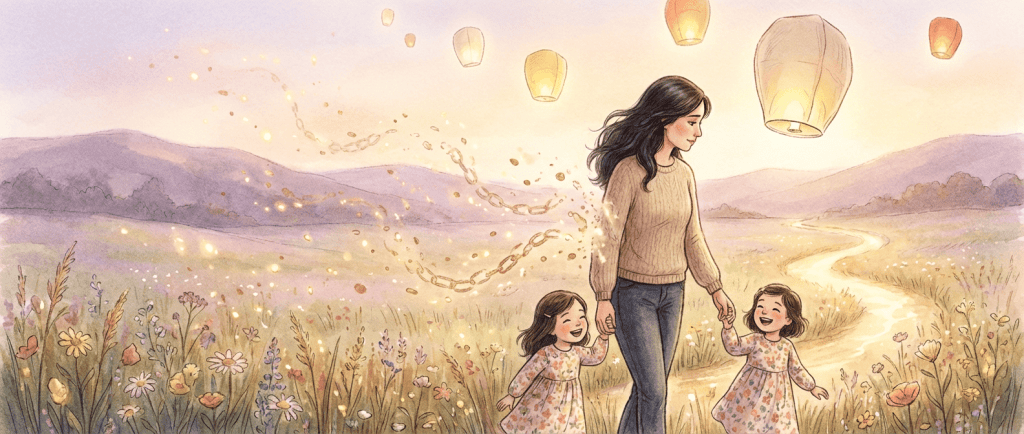
Today, I look at Maanvi and Jiya and I see two incredible girls.
They are loud.
They are smart.
They are confident.
And when they set their minds to something, they are unstoppable.
Their confidence and self-esteem come from growing up in an environment where they were never exposed to the toxicity I experienced.
No one belittles them.
No one makes snide comments about them.
No one makes them feel small.
All they have ever known is unconditional love and support.
They have their dad, me, and his side of the family. They also have the carefully chosen people I kept in my life from my past — like their godmother and my best friend from university.
Those relationships are built on respect, kindness, and love.
The Quiet Loneliness
But I won’t pretend it’s easy.
Not having anyone from my side of the family can sometimes feel lonely.
There are moments when I wish I had somewhere to go where I could simply be someone’s daughter again. Somewhere I could rest and not just be a mum or a wife.
A safe haven.
But despite that loneliness, I would still make the same choice again.
Because I would rather carry that loneliness than allow my children to experience the trauma of toxic relatives.
Walking away from family is never easy.
But sometimes, protecting your peace — and protecting your children — means choosing distance over loyalty.
Mental health, in general, is a subject that open conversations about have only really become common over the last few years. People are only now starting to feel more comfortable using labels like anxiety, depression, and trauma.
But even now, within the South Asian community, mental health is still rarely talked about openly. It’s often seen as taboo — something to hide, something to deal with quietly, something that should never be discussed outside the home.
So growing up nearly 30 years ago, struggling with social anxiety and depression in a super strict Indian household, you can imagine how lonely that felt.
I didn’t feel like I could talk to anyone about what was happening inside my head.
I didn’t know how to explain how terrified I felt in large groups. How the thought of speaking in public made me feel physically sick. How my chest would tighten and my stomach would twist before family gatherings.
Talking about mental health with parents when the subject itself is taboo is difficult.
But in a toxic family environment, it’s even harder.
There was one time when my parents did find out about my depression. I had been so low that I took a bunch of tablets. The school found out and, naturally, my parents were called in. They were made aware of what had happened.
That moment could have been the beginning of healing.
It could have been the moment my family sat down with me and asked, “What’s going on? Why is our daughter hurting this much?”
But that’s not what happened.
Instead, it was turned against me.
I was made to feel like I had let my parents down. Like I had embarrassed them. Like I was the failure.
Instead of concern, there was anger.
Instead of support, there was shame.
That moment reinforced something very clearly in my mind:
Keep your thoughts to yourself.
Keep your feelings to yourself.
Never trust anyone with your pain.
And that’s exactly what I did.
I carried that silence into adulthood. I was always uncomfortable talking openly about my family or my mental health struggles. Even my husband didn’t fully understand what my home life was like before we got married.
It was only after he moved in with us that he began to see it for himself — how toxic the environment really was, and how much of my anxiety and depression stemmed from it.
And that’s when something hit me.
What I had grown up thinking was “normal” … wasn’t normal.
The constant walking on eggshells.
The fear of saying the wrong thing.
The emotional outbursts that were brushed under the carpet five minutes later.
The pressure to always be perfect.
In our community, we are taught to protect our parents at all costs. To never speak badly about them. To never expose what happens inside the home.
Silence equals loyalty.
But that silence was suffocating me.
Silence
In many South Asian families, silence isn’t enforced loudly. It’s taught quietly.
You learn very early what is safe to talk about — and what is not.
Mental health was not safe.
Feelings were not safe.
Questioning authority was definitely not safe.
Even after my overdose, there was no real conversation. No counselling was arranged. No one checked in to see how I was coping afterwards.
Just disappointment.
When a child learns that their pain causes anger instead of concern, they stop sharing.
They stop trusting.
They stop asking for help.
And that silence follows them into adulthood.
Shame
The shame ran deep.
Not just because I was depressed — but because I believed I was weak for being depressed.
In many South Asian communities, there is a strong expectation to be resilient, grateful, and strong no matter what. You are taught to push through.
So when you can’t push through, you start to feel broken.
I internalised everything.
If I felt anxious, I told myself I was being dramatic.
If I felt depressed, I told myself I was ungrateful.
If I was struggling, I told myself to try harder.
Even after getting married, I protected my parents’ image. I minimised things. I downplayed the toxicity. Because in our culture, “family matters stay in the family.”
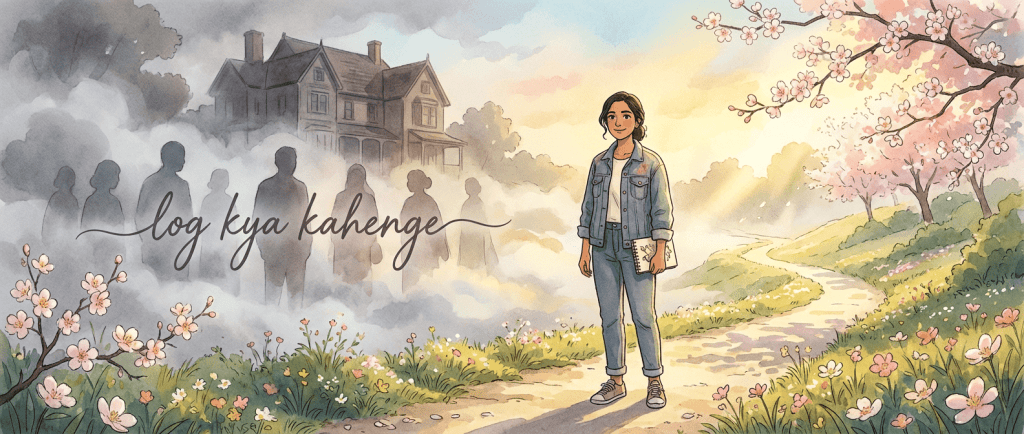
“Log kya kahenge” doesn’t always need to be said out loud.
It lives inside you.
“Log Kya Kahenge”
What will people say if they know your daughter tried to take tablets?
What will people say if they know your family has problems?
What will people say if you go to therapy?
These invisible “people” hold enormous power in our culture.
Sometimes more power than our own children’s wellbeing.
Looking back now, I realise something painful but also freeing:
My family’s reputation was protected more than my mental health.
And I see this pattern everywhere in the South Asian community.
We celebrate success loudly.
But we bury pain quietly.
We invest heavily in careers.
But rarely in emotional awareness.
We teach our children how to achieve.
But not how to cope.
Why It’s Still So Hard
Speaking up about mental health in our community is still difficult because it can feel like betrayal.
It feels like you’re exposing your family.
It feels like you’re being disloyal.
And loyalty is deeply rooted in our culture.
But here’s something I’ve learned over the years:
There is a difference between loyalty and self-abandonment.
Staying silent was costing me my mental health.
Staying silent was feeding my anxiety.
Staying silent nearly cost me my life.
That isn’t loyalty.
That’s survival.
And survival is not the same as healing.
Breaking the Silence
I’m not writing this from a place of blame anymore.
I understand that my parents didn’t have the tools. Mental health wasn’t openly discussed in their generation either. For them, survival, sacrifice, and reputation came first.
But understanding something does not mean repeating it.
And that’s where change begins.
With us.
With uncomfortable conversations.
With therapy.
With boundaries.
With saying, “That hurt me.”
With telling our children, “It’s safe to talk to me.”
Mental health conversations in South Asian families are still difficult because we are undoing decades of silence, shame, and fear of judgement.
But every time one of us chooses honesty over image, we weaken that cycle.
Every time we say, “I’m not okay,” we create space for someone else to say it too.
I refuse to let silence raise my daughters.
I refuse to let shame define their worth.
And I refuse to let “log kya kahenge” matter more than their emotional safety.
Maybe I didn’t grow up in a home where mental health was understood.
But I can create one where it is.
And that’s how generational cycles begin to break.
Generational trauma isn’t something I read about in books.
It’s something I witnessed inside my own family.
Growing up with a narcissistic father meant my siblings and I were raised in an environment where emotional safety didn’t really exist. We were all affected by it in different ways.
The difference between me and my brothers is this:
I chose to break the cycle.
They unknowingly continued a version of it.
My brothers weren’t narcissists. But the families they built reflected unresolved trauma in different forms.
One brother married someone who prioritised a Western social lifestyle over motherhood. There’s nothing wrong with wanting independence — but when you have children, they need presence. Her sons often felt secondary to everything else going on in her life.
The other brother’s household went in the opposite direction — but the outcome was even more damaging.
His wife believed her sons could do no wrong. Their aggression was celebrated. Their behaviour was excused. Meanwhile, when my brother disciplined them, it escalated into corporal punishment. What started as slaps turned into whatever object was within reach. Over time, the boys became immune to it. They would laugh while being hit. And it was spoken about almost as a badge of strength — that they could “take a beating.”
That dysfunction had consequences.
All three boys eventually had serious run-ins with the law.
One became involved in drug dealing.
One fabricated a criminal accusation that collapsed in court.
The youngest caused a fatal car crash while under the influence of drugs, resulting in the deaths of two passengers and life-altering injuries to another driver. He was later sentenced to prison.
When I look at it, I don’t just see “bad choices.”
I see unresolved trauma.
I see emotional neglect.
I see extremes — either no boundaries or violent ones.
I see children who were never truly seen, heard, or guided.
And I made a decision long before I had my own children:
That would not be my story.
Choosing a Different Path
I am a mum. I also now have a public presence — podcasts, interviews, events, travel.
Life is busy.
But the difference is this: my children were my priority long before I built anything online.
I spent the first eight years of Maanvi’s life and the first five years of Jiya’s life as a stay-at-home mum. I didn’t work. I poured myself into raising them. I only started working once Jiya was in full-time school. And it’s only in the last few months that my public work has expanded.
Even now, I structure my job around my children.
I start work at 6am. I am not a morning person — at all. But by 2pm, I’m done. That gives me afternoons and evenings with them. I could easily work 9–5. It would be easier for me. But it would give me barely any time with them before bedtime.
And I know how fast this stage of life disappears.
Maanvi is already 11, almost 12. Secondary school. WhatsApp chats with friends are starting to take priority over chats with mum — and that’s normal. But I’ve built a relationship where she knows I am safe. I check in with her intentionally. I create space for her to talk.
Jiya is different. She’s loud, funny, argumentative with her sister — so I assumed she was expressive. It was my husband who gently pointed out that when it comes to her feelings, she stays quiet. She doesn’t want to “bother” anyone.
That hit me hard.
So we created something small but meaningful — weekend mummy-and-daughter mornings. While everyone else sleeps in, I wake up at 8am (again, not my natural choice!) so she gets two uninterrupted hours of just me.
No distractions.
No rushing.
Just connection.
Because I’ve seen what happens when children don’t feel seen.
Accountability and Balance
We’re not perfect parents.
Life gets hectic. I get tired. Sometimes I’m not at my best. But my husband and I hold each other accountable. If he feels the girls need more time with me, he’ll say it. If I see something that needs correcting, I address it.
Our daughters are kind, smart, respectful girls. We’re proud of them. But we don’t idolise them blindly. They are children. They will make mistakes. And when they do, we correct them.
Not with violence.
Not with neglect.
Not with ego.
But with boundaries, love, and consistency.
I am the disciplinarian in our home. I hold everyone accountable — including my husband — and he does the same for me.
Because I have seen both extremes:
Children who are never corrected.
And children who are only corrected through fear.
Neither creates emotionally healthy adults.
The Cycle Ends With Me
Generational trauma doesn’t disappear by accident.
It ends when someone becomes aware enough — and brave enough — to do the work.
I saw what unresolved pain did to my siblings’ families. I saw how quickly trauma can shape parenting decisions. And I decided my past would not dictate my children’s future.
Have I done everything perfectly? No.
But my daughters are raised with love, structure, safety, and accountability.
The way I’m raising my daughters is very different to the way I was raised.
I am consciously breaking the generational trauma I grew up with. I am choosing not to pass it down.
But there is still a part of me that feels guilty.
Guilty that they have to grow up with a mum who carries so much past trauma.
Guilty that I’m still healing while raising them.
Guilty that I don’t have the family support I once imagined I would.
Sometimes I wish I didn’t carry any of it.
Sometimes I wish I was the kind of mum who had a big, loving family on her side to help raise her children.
The “Ideal World” That Doesn’t Exist
In an ideal world, my siblings and I would still have a great relationship.
We would see each other on weekends and festivals.
My girls would grow up with five older, overprotective cousins who would dote on them — and threaten to beat up anyone who dared to bully them.
In an ideal world, my daughters would be surrounded by the colourful Indian Hindu heritage that I grew to love. They would feel adored by my side of the family.
But they don’t.
They don’t know my side of the family.
Because of the bullying I experienced, I made the painful decision to walk away.
That means:
No cousins at festivals.
No big family weekends.
No aunties stepping in with advice.
No emotional support system to guide me through motherhood.
It’s just me and my husband figuring it out as we go.
And it hasn’t been easy.
Parenting While Healing
I still carry my past into my parenting.
Sometimes I react badly — especially when I’m angry. I’m still learning new coping mechanisms instead of defaulting to the childhood habits I witnessed and absorbed growing up.
And I hate when I slip.
But I am breaking cycles.
And I am proud of that.
Breaking cycles, however, means doing uncomfortable work. It means putting my needs first sometimes so I can show up better for my children.
And that is not easy.
The Weight of Mum Guilt
Mum guilt is huge for me.
Guilt for:
Not being the “perfect” mum.
Not always being emotionally available.
Putting my own needs and dreams first.
Wanting more than just being a wife, a mum, and an employee.
Putting myself first is new territory for me.
And it’s uncomfortable.
The Unexpected Shift
For those who don’t follow me on social media — my life has changed dramatically over the past few months.
Last October, I posted a TikTok carousel sharing the things I was told as a child and young adult — and how I overcame them.
It went viral.
In November, podcaster Mani Kaur invited me onto her show. I agreed, not fully realising what I was stepping into.
That episode on Mani Kaur TV (currently at 147K views) went viral too.
Suddenly, I was being approached for:
A radio interview with BBC West Midlands
A makeover collaboration with Nosh MUA
Further podcast features
It all happened just before Christmas — a sacred time for my little family — so I postponed everything until January.
And I’m so glad I did.
We had the most beautiful Christmas. Just us. Movies, laughter, quiet family time.
I had no idea what the New Year would bring.
The Makeover That Became Friendship
The first thing I did in January was the makeover with Nosh MUA.
What an experience.
We had the most incredible girly day — laughter, conversations, confidence boosting. Moving from London to the West Midlands was the right decision for my family, but I left behind close female friendships.
That day reminded me of who I used to be.
And then her TikToks went viral.
In one week, the four videos she posted featuring me reached over a million views combined.
My Instagram exploded too.
BBC Radio and Beyond
Next came my live interview with Mya Khan on BBC West Midlands.
It was terrifying.
And I loved every second of it.
Two days later, BBC News published a follow-up article. My platform kept growing.
Then came the feature that truly changed everything — an interview with People of India, a platform that shares human interest stories across the South Asian community.
I went to bed with 836 followers on Instagram.
I woke up with 1,004.
By that night, I was at 1,200.
The DMs flooded in. Messages of support. Stories from people in toxic families. Invitations to collaborate.
And I realised…
This isn’t just attention.
This is purpose.
And Then Came the Tears
But here’s the part no one sees.
The mum guilt.
I’m currently writing this on a train to London for another podcast. I won’t be home until tomorrow evening.
Last night, Jiya cried.
She started off excited — helping me pack, ticking off my checklist — but as bedtime came closer, the tears started.
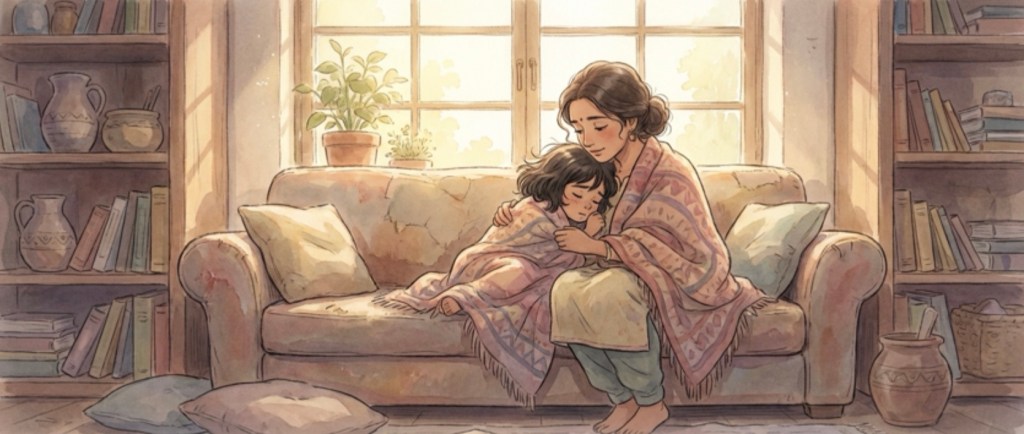
We cuddled.
She cried in my arms and fell asleep on me — something she hasn’t done since she was a toddler.
And yes… I took photos.
Because that’s what mums do.
She woke up, I tucked her into bed, and ten minutes later Maanvi came to tell me Jiya was crying again.
So I went back and lay beside her until she fell asleep.
This morning she was braver.
But sitting here on this train, my mind is still with her.
Her dad and Maanvi promised to look after her. I know she will be fine.
But being a mum means the worry never truly leaves.
Choosing More — Without Losing Myself
Nitin is incredibly supportive.
Maanvi is proud of me — sharing my interviews with her friends and teachers.
Jiya is proud too.
But she feels the shift more deeply.
And that’s what weighs on me.
Because these opportunities make me feel like the teenager I never got to be — hopeful, ambitious, passionate.
For the first time, I feel like I am becoming more than just the roles assigned to me.
I am a voice.
An advocate.
A woman building something of her own.
But pursuing that means stepping away from home sometimes.
And even though I know this will benefit my daughters in the long run, the guilt still whispers.
Yet I’m doing this for them.
To show them:
Dreams don’t have an expiry date.
Your past does not define your future.
You are allowed to want more.
And nothing should hold you back from becoming who you’re meant to be.
I am breaking generational trauma.
And I am breaking the idea that mums must shrink themselves to be good mothers.
I didn’t wear pretty dresses. I wasn’t encouraged to explore makeup or jewellery as a teenager. My wardrobe was baggy hoodies, oversized tops and loose jeans. Practical. Comfortable. Invisible.
But the truth is… I wanted to be girly.
I grew up watching Bollywood movies, completely mesmerised by the actresses in their beautiful, colourful outfits. The makeup. The jewellery. The elegance. I remember wishing so deeply that I could dress like that too.
But I was never allowed.
So when I had two daughters, I made a quiet promise to myself:
I would never restrict them in the way I felt restricted.
I wanted them to be free to discover who they were.
⸻
When they were babies, I quickly realised something funny — “girly” baby clothes are not always comfortable. Lace, frills, stiff fabrics… they look adorable, but they aren’t always practical for tiny humans trying to explore the world.
So my husband and I made a simple rule: comfort comes first.
Their wardrobes became a mix of everything.
Cute tops and jeans during the day.
Comfy boys’ pyjamas at night.
No rules. No labels. Just comfort.
And as they grew older, we followed their lead.
Maanvi was always more tomboy-ish. Comfort over style. Trainers over sparkles. But then there were moments — birthdays, parties — when she did want to wear dresses. So we bought the dresses.
Now, as a pre-teen, she’s discovering makeup. And we’re encouraging it gently — age-appropriate, sensitive skin products, and constant reminders that makeup enhances beauty, it doesn’t create it. She is beautiful with it, and without it.
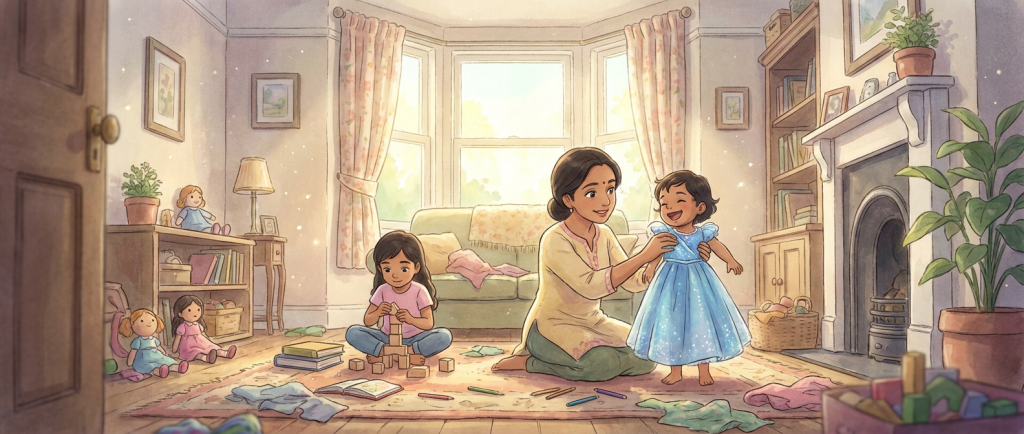
Jiya, on the other hand, has always been our girly girl. Dolls, dress-up, sparkles — she loved it all from the very beginning. So we supported that too.
Same parenting. Same freedom. Different personalities.
And that’s the point.
⸻
The same thing applied to toys and hobbies.
Jiya loved dolls and dressing up.
Maanvi loved books, activity toys and building blocks.
So we bought dolls.
We bought books.
We bought dress-up outfits.
We bought Lego.
Because growing up, my interests were never encouraged.
My love of reading wasn’t nurtured.
My passion for crafts wasn’t supported.
My interest in writing wasn’t taken seriously.
And I never realised how much that affected me… until I became a parent.
I made it a mission to support my girls in their passions.
And in doing that, something unexpected happened.
I started healing parts of myself too.
⸻
Maanvi has always been my mini-me.
She loves writing, just like I did as a child. When she was five, I found an opportunity called the Child Author Project. One hundred children were invited to write pieces based on a theme, and their work would be published in a book.
I signed her up immediately.
The project ran for three years.
Four books were published.
Maanvi was part of all four.
And every single one became an Amazon bestseller.
Watching her see her words in print… watching her confidence grow… it felt like healing a tiny version of myself that never got that opportunity.
⸻
For years, I thought I was just trying to be a better parent than my parents were to me.
But what I didn’t realise was that I was reparenting myself at the same time.
My husband has always been incredibly supportive. He has never questioned my spending or made me feel guilty for investing in things I enjoy — something that was very different from my childhood.
After Maanvi was born, I slowly started trying things I’d always been interested in. By the time Jiya arrived, my confidence had grown enough that I started small craft businesses while being a stay-at-home mum.
Crafting reignited something in me.
It rebuilt my confidence.
It brought back my creativity.
It reminded me who I was before life told me who I should be.
And as my confidence grew, I saw the same confidence growing in my daughters.
⸻
That’s the thing about parenting while healing.
You think you’re teaching them.
But so often… they are teaching you.
They teach you what freedom looks like.
What encouragement looks like.
What unconditional support looks like.
They show you what you deserved all along.
Raising daughters while reparenting yourself is emotional. It’s messy. It’s beautiful. And sometimes, it’s painful.
Because every time you give your children something you didn’t receive, a small part of you realises what you missed out on.
But instead of resentment, something softer grows.
Growing up in a toxic family felt like a constant battle to protect my sanity and shield myself from the environment around me. The truth is, I didn’t even realise I had been living in survival mode until the first time I moved out of my parents’ home with my husband after a huge fight with my dad.
Yes, there was still some toxicity in my life — my sister-in-law was still present — but it wasn’t a daily reality anymore. For the first time, I was free to live my life with my husband in our quirky little flat.
That peace didn’t last long.
When my dad died, I was pulled straight back into family drama after deciding to move home to look after my mum. I had no idea life was about to become even harder.
The second real taste of freedom came when I cut ties with my side of the family and moved away to the West Midlands. For the first time, I didn’t live in fear of toxic family members turning up at my doorstep — something that had always been possible before because they still had access to the home we lived in.
That feeling of not fearing a knock at the door was a huge relief.
But I still wasn’t completely free.
A legal case involving my sibling and family was ongoing, and the emotional pressure of it followed me into this new chapter of life.
Building a Life While Carrying Constant Dread
I tried my best to live life on my terms, but every few weeks something related to the court case would resurface. Trips to London to meet solicitors. Paperwork. Stress. Emotional upheaval.
At the same time, life kept moving forward.
Maanvi started full-time school.
Jiya grew from baby to toddler.
I ran my small craft business from home.
From the outside, life looked normal. But internally, there was always a cloud of dread hanging over me — wondering what would appear in the next legal document or what my family would say next.
We still made memories. Trips to the zoo, the park, the farm — all the places I’d never been able to take the girls when we lived in London. We tried to create joy and normality for our children.
But the fear never fully left during the nine years the court case lasted.
During those nine years, I conceived and gave birth to Maanvi, raised her until she was three and a half, became pregnant with Jiya, moved house while 22 weeks pregnant, gave birth again, raised two young children, and ran a business — all while carrying the emotional weight of an ongoing legal battle.
When the Case Finally Ended
Life didn’t dramatically change while the case was ongoing.
The real shift came when it finally ended.
The change wasn’t immediate. The first year, if I’m honest, I just relaxed. The mental load I had carried for years suddenly disappeared. It felt like a huge weight had been lifted, and all I wanted to do was enjoy the quiet after closing such a painful chapter.
For the first time in years, life felt peaceful.
Stepping Outside My Comfort Zone
One of the first things I did was buy an auction property.
I’ve always loved interior design — maybe I’m not an expert, but I love transforming spaces. After the house in London sold following the case settlement, my husband and I decided to try property renovation.
We found a house, bid at auction… and won.
Then something unexpected happened.
We received an email from the auction house saying the TV show Homes Under the Hammer had been filming at the auction and were looking for participants.
I went back and forth for ages. I wanted to do it, but my insecurities resurfaced immediately. I worried about judgement, my skin condition, my weight — all the old fears came flooding back.
My husband encouraged me to go for it. So I did.
Applying for the show was the first time I truly stepped outside my comfort zone — and it definitely wasn’t the last.
Rebuilding My Confidence and Career
The next big step was applying for a job I never believed I was good enough to get.
I had worked in banking for nearly ten years before becoming a stay-at-home mum. After moving to a new city and raising two children under five, I assumed I would return to work in a basic role — maybe retail or reception.
I didn’t believe I could build a career again.
My husband believed in me more than I believed in myself. He encouraged me to apply for roles in the Civil Service.
So I took a leap of faith and applied.
I was shocked when I got an interview. Then the self-doubt hit — I hadn’t interviewed in nearly 15 years. When the application asked about reasonable adjustments, I disclosed my anxiety. I was allowed a fidget toy and given extra time to answer questions.
And I got the job.
No Longer in Survival Mode
That moment felt like a turning point.
For the first time, I realised I was no longer surviving — I was living.
I started showing up on social media, sharing my story and promoting my book. I didn’t expect much. But one post went viral last October and triggered a chain reaction of opportunities, conversations, and hundreds of new followers.
Sometimes, when I think I’m over my childhood trauma — when I truly believe I’m not letting my past define my present — I catch myself doing something that pulls me straight back. And it’s usually in those moments that I realise I’ve repeated something with my daughters that my family once did to me.
It’s never anything huge. It’s not bullying or putting them down. It’s quieter than that, and maybe that’s what makes it harder to notice.
It’s not listening properly when they’re talking.
It’s telling them to come back later because I’m busy blogging, working, or mentally elsewhere.
And yes, I do that.
I’m not proud of it. But when I notice it, I try to repair it. I acknowledge it. I name it. And I try to make things right with my girls — because that part matters.
Recently, it’s shown up in a way that made me uncomfortable to admit: I’d been unintentionally overlooking Jiya in favour of Maanvi.
Maanvi is going through a lot of change right now. She’s moved from primary school to secondary school. She’s stepping into her pre-teen years, navigating emotional highs and lows. And she’s recently started her period — something that’s been unsettling and confusing for her.
Naturally, my attention has leaned more towards her.
A couple of nights ago, Jiya came to me while I was in bed and asked for cuddles. There was something in the way she asked — quiet, careful — that told me she needed me.
So we cuddled under the duvet. I gently started talking to her, asking if she was okay, if there was anything she wanted to say.
Jiya is a funny one. She’s bubbly, loud, cheeky, fiery, and a total drama queen. But when it comes to her feelings, she’s incredibly introverted.
She’s had a minor speech issue since she first learned to talk — nothing major, but she speaks quite nasally and can sometimes be hard to understand. Because of that, she tends to keep things to herself.
And yet, that quietness isn’t really her.
Because I know her personality so well, I think I’ve unconsciously assumed she’s okay.
I’ve focused more on Maanvi, who has always been sensitive, emotional, and open. Maanvi talks — endlessly. From the moment she could speak, she narrated everything she felt, thought, or wanted. With her, emotional connection felt instinctive. I simply gave her what she asked for.
But Jiya doesn’t ask.
My husband noticed it before I did. He gently said that Jiya seemed a little sad lately — that she might need a bit more attention from both of us.
So we adjusted.
He started spending more one-on-one time with her in the evenings. I started creating more space — for conversations, for connection, for simply being present.
And that’s when I realised something uncomfortable.
I don’t actually know how to emotionally support a child who doesn’t hand me their feelings on a plate.
Because I never had that kind of emotional support myself.
I wasn’t taught how to sit with feelings, name them, or express them safely.
With Maanvi, it felt familiar. She’s like me — sensitive, expressive, emotionally open. But Jiya is a blend of me, my husband, and even a little of my dad.
And if I’m being completely honest, I sometimes find it hard to know how to comfort her in the way she needs.
But I’m trying.
I’ve started movie mornings with her. She wakes up early on weekends, so now I do too. We sit on the sofa, wrapped in blankets, watching a film together before Maanvi and her dad wake up.
No pressure to talk.
No deep questions.
Just closeness.
Just consistency.
And slowly, it’s working.
What this experience has taught me is that healing from childhood trauma doesn’t mean we’ll never repeat old patterns. It means we notice them sooner. It means we pause, reflect, and choose repair instead of denial.
I won’t always get it right as a parent. Sometimes my past will still show up in my parenting.
But the difference is this: my daughters are allowed to feel it. They are allowed to name it. And they are met with accountability, honesty, and love.
I’m learning that breaking generational cycles isn’t about being a perfect, emotionally healed parent. It’s about being a present one.
One who listens.
One who apologises.
One who adjusts.
One who keeps showing up — even when it brings up parts of herself she’d rather not face.
And if my daughters grow up knowing that their feelings matter, that they are seen even when they are quiet, and that repair is always possible — then maybe that’s enough.
Maybe that’s what healing, motherhood, and breaking the cycle really looks like.
Being Indian, many of us grow up with deeply ingrained social norms and expectations — especially around how society perceives us and the pressure to keep up appearances.
These social expectations played a huge role in my family. Not so much in the UK, as my dad hardly knew anyone here, but he was intensely concerned about what people in India thought of him and how they perceived his family.
He had carefully crafted a persona — the image of a successful Non-Resident Indian (NRI) who had it all: money, status, UK citizenship, and most importantly, the perfect family.
The Pressure to Be Perfect
My dad had very clear expectations of us as a family. As the head of the household, he demanded control and obedience. We were expected to listen without question, ask permission for everything, and above all else, appear perfect in front of others.
I, however, was always the slightly ‘odd’ one. I was born and raised in the UK, so I didn’t grow up immersed in Indian society or its rigid social norms. I understood British culture and UK societal expectations — which are very different. Yet I was still expected to follow Indian norms unquestioningly. I did try to fit in, but there was always a part of me that simply didn’t.
Mental Health and Cultural Silence
Growing up, I struggled with anxiety and mild depression. Whether that stemmed from a toxic family environment or was something I was predisposed to, I’ll never fully know. What I do know is that mental illness was a complete taboo.
In Indian society, mental health simply wasn’t discussed — and certainly not accepted. This meant I suffered in silence, managing everything alone. When a child is forced to deal with overwhelming emotional pain without support, something eventually gives.
For me, that breaking point came when I was 14.
My Cry for Help
At 14, I began taking extra painkillers. Not an entire packet — but instead of following the guidance of two pills every four hours (no more than eight in a day), I took all eight at once.
I don’t think I truly wanted to end my life. I was desperate for someone to notice that I needed help. It was a cry for help — one that went unseen.
The only people who knew were my high school friends. They tried to support me, but the pain and mental anguish I was carrying were far too heavy for teenagers to manage alone. Eventually, they told an adult — a teacher — and that’s when everything unravelled.
When the Truth Came Out
My mental health struggles finally came to light at home. You might assume that my parents would have reacted with concern, comfort, or care. That they would have hugged me, reassured me, or tried to understand what had led me there.
But that didn’t happen.
Instead, they turned on me. I was made to feel guilty — for having a problem, for letting them down, for how they would be seen by others. My pain became an embarrassment. At no point was I made to feel safe, supported, or loved in the way parents should offer their child.
Finding Support Outside My Family
The people who truly helped me were my school teachers. I was given counselling — something my parents strongly opposed, as they believed therapy was only for those with ‘severe’ mental illness.
Through therapy, I slowly came to a painful realisation: my family was never going to support my emotional needs. So alongside healing, I began planning my escape.
Escaping to Survive
University became my way out. Moving to a different city was the only escape I could see. I studied hard, aimed for good grades, and played the role of the ‘perfect Indian daughter’ — all while quietly biding my time.
At university, I finally experienced freedom and self-confidence. I did things I never imagined I could — or would — do. And instead of feeling shame, I felt hope. For the first time, I could see a future worth fighting for.
Building My Own Support System
I knew healing wouldn’t be easy, and I knew I couldn’t do it alone. So I found my people — my tribe.
Initially, that support came from my colleagues at the bank where I worked. I formed strong friendships, particularly with managers who supported me through difficult times, forgave my mistakes, and accepted me exactly as I was — flaws and all.
One of those relationships became so meaningful that she is now a permanent part of my life, becoming the godmother to my daughters.
Still the Outsider
My family, however, never accepted me in this way. To them, I was always the odd one out — the one with ‘mental health issues’, the one who wasn’t a ‘good Indian girl’, the one destined to rebel.
And eventually, that rebellion came.
Rebellion as Healing
When I was pushed to my absolute limits and hit rock bottom, I rebelled against everything I had been taught to accept as ‘normal’. That rebellion marked the beginning of my healing.
For the first time, I allowed myself to live life on my own terms — to heal from the life I had survived. The social guilt still lingers, and perhaps always will. That guilt is one of the reasons I wrote my book, Breaking Free, and why I continue to blog.
Why I Write
Through my writing, I’m trying to shine a light on the experiences of women like me — the stories we don’t talk about, the pain we hide, and the healing we desperately need.
Life at home growing up wasn’t easy. It was a tough road, but it also became one filled with lessons that shaped my adult life — even though I never planned far enough ahead to imagine I would one day become an adult with a family of my own.
To be brutally honest, for a long time I had only planned my life up to the point of finishing university. Getting my bachelor’s degree was the final goal I had set for myself — the last thing I wanted to achieve so I could leave on a high, having done something that made my parents proud. After university, I had planned to end my life.
But then I met someone online. I fell in love, and for the first time, I felt hope — hope for a future, for love, for something better. The relationship didn’t last through my final year at university, but it lit a small flame inside me. If I could find love once, I could find it again. That belief became my reason to keep going.
Returning Home After University
Looking back now, I know how fragile that hope was. I also know that building my entire future around finding a man sounds ridiculous — but desperation doesn’t think logically. I needed something to look forward to in order to survive the toxic environment I returned to after graduation.
People often ask why I moved back home after four years of freedom, studying in a city miles away. Why I didn’t settle in Birmingham, where I went to university. The truth is, despite the independence I tasted during term time, I wasn’t strong enough to defy my parents or the expectations placed on me.
My family never gave me the option to build a life in Birmingham beyond university. During every holiday, I was expected to return to London — even at Christmas, when my parents were away in India for their annual winter break. My eldest brother lived across the road from the family home and was tasked with keeping an eye on me. One Christmas, I slept in his front room for the entire holiday because my parents had rented out a bedroom in the house, and my brothers didn’t want me staying alone with a tenant.
The day after my final exam, my father sent my eldest brother to collect me and all my belongings and bring me back to London.
On top of that, my parents were living alone in the house, as all my siblings had moved out. They had promised me the family home as my inheritance, leaving me with very little choice but to return.
Searching for a Way Out
Dreaming of finding my soulmate became the light at the end of a very dark tunnel. I endured bullying from my sisters-in-law. I endured having no real life beyond work and being at home with my parents. I tolerated it all with the hope that love would be my escape.
In my twenties, marriage felt like the socially acceptable way out. When I signed up to matrimonial websites, my parents were happy — they believed I was following the path they had chosen for me.
I dated many men, but most couldn’t look past my skin condition, and those connections rarely made it beyond the first date. A few short-term relationships followed, but thankfully they didn’t last. Looking back, they were just as toxic as my family environment, and marriage with them would have been its own kind of prison.
I knew what I wanted because I had experienced it once before — kindness, respect, safety. I was willing to meet countless frogs in the hope of finding my prince.
Finding Strength in Small Freedoms
University had given me a small taste of freedom, and although my parents loosened their grip slightly, it was still limited. I wasn’t allowed to spend entire weekends out or use my own money freely, so I chose my battles carefully.
I joined a gym under the excuse that my best friend was getting married and I wanted to look good. I joined a weekly salsa class simply because I was curious — and because it was only one evening a week. Considering I was paying for almost everything in the house, including most of the bills, I felt I was entitled to that much.
Bit by bit, I built inner strength — quietly, carefully — until I met my husband.
Marriage and the Beginning of Real Change
Marriage didn’t bring peace straight away. In fact, that’s when the real rebellion began.
My husband was my biggest supporter. He saw how much I gave and how little I received in return. He witnessed the bullying, the control, the outdated Indian norms I lived under — and he hated it for me. Still, he stayed quiet for my sake.
What my family didn’t know was that my husband wasn’t a passive man. He wasn’t a ‘goody two-shoes’. He had been a troublemaker back in India, a player before he met me, and he was more than capable of standing up to my entire family if needed. But he loved me, and my happiness at the time meant keeping the peace.
At 29, I was still that little girl craving acceptance and unconditional love from her family. I wanted everyone to get along — and so my husband stayed silent.
Walking Away
Everything changed after weeks of relentless emotional abuse from my father. I broke down completely. That was the moment my husband snapped.
We packed a suitcase and left.
As we were leaving, my father threatened to report my husband for elderly abuse. My husband turned around and calmly told him that doing so would expose far more — including how my father had married his daughter to an Indian immigrant so he could be financially exploited and treated like a servant.
That silenced my father. My husband was the only full-time earner in the household, while I had reduced my hours due to health issues caused by prolonged stress.
Later, my husband apologised to me for what he had said. He knew I hadn’t married him for money or security — we married for love. But he explained that it was the only language my father understood.
Healing, Motherhood, and Breaking Cycles
It wasn’t until I left that house — and later became a mother — that healing truly began.
My family never taught me how I wanted to be. They taught me how I didn’t want to be, and how I didn’t want to raise my children.
When Maanvi was born, I was still at the beginning of a court case. I was a new mother with no guidebook, no family support, and no idea what I was doing. So I followed my instincts. I made mistakes. I learned as I went. But everything I did, I did with my daughter’s best interests at heart.
When Jiya came along, things felt a little easier — experience had taught me more than any advice ever could. But it wasn’t until the court case ended for good that I could finally breathe.
For the first time, I was able to live life on my own terms — and raise my daughters in a way that felt safe, loving, and free.Life at Home Growing Up
Life at home growing up wasn’t easy. It was a tough road, but it also became one filled with lessons that shaped my adult life — even though I never planned far enough ahead to imagine I would one day become an adult with a family of my own.
To be brutally honest, for a long time I had only planned my life up to the point of finishing university. Getting my bachelor’s degree was the final goal I had set for myself — the last thing I wanted to achieve so I could leave on a high, having done something that made my parents proud. After university, I had planned to end my life.
But then I met someone online. I fell in love, and for the first time, I felt hope — hope for a future, for love, for something better. The relationship didn’t last through my final year at university, but it lit a small flame inside me. If I could find love once, I could find it again. That belief became my reason to keep going.
Returning Home After University
Looking back now, I know how fragile that hope was. I also know that building my entire future around finding a man sounds ridiculous — but desperation doesn’t think logically. I needed something to look forward to in order to survive the toxic environment I returned to after graduation.
People often ask why I moved back home after four years of freedom, studying in a city miles away. Why I didn’t settle in Birmingham, where I went to university. The truth is, despite the independence I tasted during term time, I wasn’t strong enough to defy my parents or the expectations placed on me.
My family never gave me the option to build a life in Birmingham beyond university. During every holiday, I was expected to return to London — even at Christmas, when my parents were away in India for their annual winter break. My eldest brother lived across the road from the family home and was tasked with keeping an eye on me. One Christmas, I slept in his front room for the entire holiday because my parents had rented out a bedroom in the house, and my brothers didn’t want me staying alone with a tenant.
The day after my final exam, my father sent my eldest brother to collect me and all my belongings and bring me back to London.
On top of that, my parents were living alone in the house, as all my siblings had moved out. They had promised me the family home as my inheritance, leaving me with very little choice but to return.
Searching for a Way Out
Dreaming of finding my soulmate became the light at the end of a very dark tunnel. I endured bullying from my sisters-in-law. I endured having no real life beyond work and being at home with my parents. I tolerated it all with the hope that love would be my escape.
In my twenties, marriage felt like the socially acceptable way out. When I signed up to matrimonial websites, my parents were happy — they believed I was following the path they had chosen for me.
I dated many men, but most couldn’t look past my skin condition, and those connections rarely made it beyond the first date. A few short-term relationships followed, but thankfully they didn’t last. Looking back, they were just as toxic as my family environment, and marriage with them would have been its own kind of prison.
I knew what I wanted because I had experienced it once before — kindness, respect, safety. I was willing to meet countless frogs in the hope of finding my prince.
Finding Strength in Small Freedoms
University had given me a small taste of freedom, and although my parents loosened their grip slightly, it was still limited. I wasn’t allowed to spend entire weekends out or use my own money freely, so I chose my battles carefully.
I joined a gym under the excuse that my best friend was getting married and I wanted to look good. I joined a weekly salsa class simply because I was curious — and because it was only one evening a week. Considering I was paying for almost everything in the house, including most of the bills, I felt I was entitled to that much.
Bit by bit, I built inner strength — quietly, carefully — until I met my husband.
Marriage and the Beginning of Real Change
Marriage didn’t bring peace straight away. In fact, that’s when the real rebellion began.
My husband was my biggest supporter. He saw how much I gave and how little I received in return. He witnessed the bullying, the control, the outdated Indian norms I lived under — and he hated it for me. Still, he stayed quiet for my sake.
What my family didn’t know was that my husband wasn’t a passive man. He wasn’t a ‘goody two-shoes’. He had been a troublemaker back in India, a player before he met me, and he was more than capable of standing up to my entire family if needed. But he loved me, and my happiness at the time meant keeping the peace.
At 29, I was still that little girl craving acceptance and unconditional love from her family. I wanted everyone to get along — and so my husband stayed silent.
Walking Away
Everything changed after weeks of relentless emotional abuse from my father. I broke down completely. That was the moment my husband snapped.
We packed a suitcase and left.
As we were leaving, my father threatened to report my husband for elderly abuse. My husband turned around and calmly told him that doing so would expose far more — including how my father had married his daughter to an Indian immigrant so he could be financially exploited and treated like a servant.
That silenced my father. My husband was the only full-time earner in the household, while I had reduced my hours due to health issues caused by prolonged stress.
Later, my husband apologised to me for what he had said. He knew I hadn’t married him for money or security — we married for love. But he explained that it was the only language my father understood.
Healing, Motherhood, and Breaking Cycles
It wasn’t until I left that house — and later became a mother — that healing truly began.
My family never taught me how I wanted to be. They taught me how I didn’t want to be, and how I didn’t want to raise my children.
When Maanvi was born, I was still at the beginning of a court case. I was a new mother with no guidebook, no family support, and no idea what I was doing. So I followed my instincts. I made mistakes. I learned as I went. But everything I did, I did with my daughter’s best interests at heart.
When Jiya came along, things felt a little easier — experience had taught me more than any advice ever could. But it wasn’t until the court case ended for good that I could finally breathe.
For the first time, I was able to live life on my own terms — and raise my daughters in a way that felt safe, loving, and free.