Being Indian, many of us grow up with deeply ingrained social norms and expectations — especially around how society perceives us and the pressure to keep up appearances.
These social expectations played a huge role in my family. Not so much in the UK, as my dad hardly knew anyone here, but he was intensely concerned about what people in India thought of him and how they perceived his family.
He had carefully crafted a persona — the image of a successful Non-Resident Indian (NRI) who had it all: money, status, UK citizenship, and most importantly, the perfect family.
The Pressure to Be Perfect
My dad had very clear expectations of us as a family. As the head of the household, he demanded control and obedience. We were expected to listen without question, ask permission for everything, and above all else, appear perfect in front of others.
I, however, was always the slightly ‘odd’ one. I was born and raised in the UK, so I didn’t grow up immersed in Indian society or its rigid social norms. I understood British culture and UK societal expectations — which are very different. Yet I was still expected to follow Indian norms unquestioningly. I did try to fit in, but there was always a part of me that simply didn’t.
Mental Health and Cultural Silence
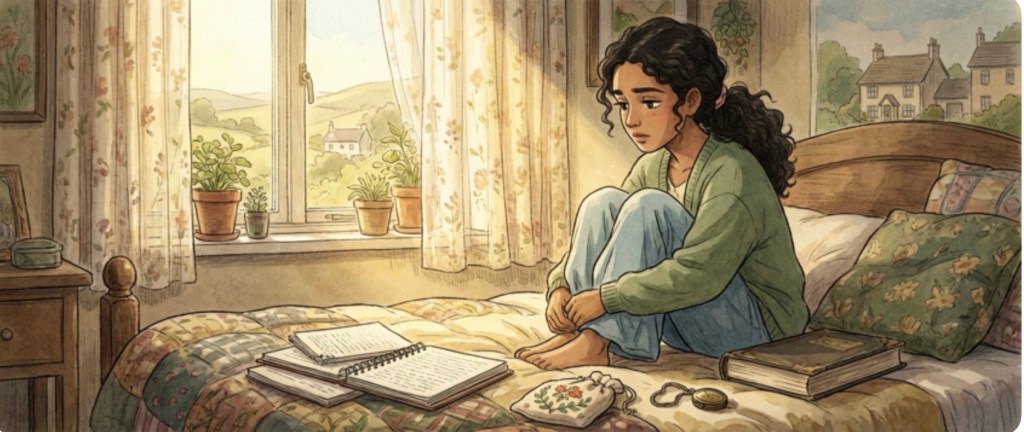
Growing up, I struggled with anxiety and mild depression. Whether that stemmed from a toxic family environment or was something I was predisposed to, I’ll never fully know. What I do know is that mental illness was a complete taboo.
In Indian society, mental health simply wasn’t discussed — and certainly not accepted. This meant I suffered in silence, managing everything alone. When a child is forced to deal with overwhelming emotional pain without support, something eventually gives.
For me, that breaking point came when I was 14.
My Cry for Help
At 14, I began taking extra painkillers. Not an entire packet — but instead of following the guidance of two pills every four hours (no more than eight in a day), I took all eight at once.
I don’t think I truly wanted to end my life. I was desperate for someone to notice that I needed help. It was a cry for help — one that went unseen.
The only people who knew were my high school friends. They tried to support me, but the pain and mental anguish I was carrying were far too heavy for teenagers to manage alone. Eventually, they told an adult — a teacher — and that’s when everything unravelled.
When the Truth Came Out
My mental health struggles finally came to light at home. You might assume that my parents would have reacted with concern, comfort, or care. That they would have hugged me, reassured me, or tried to understand what had led me there.
But that didn’t happen.
Instead, they turned on me. I was made to feel guilty — for having a problem, for letting them down, for how they would be seen by others. My pain became an embarrassment. At no point was I made to feel safe, supported, or loved in the way parents should offer their child.
Finding Support Outside My Family
The people who truly helped me were my school teachers. I was given counselling — something my parents strongly opposed, as they believed therapy was only for those with ‘severe’ mental illness.
Through therapy, I slowly came to a painful realisation: my family was never going to support my emotional needs. So alongside healing, I began planning my escape.
Escaping to Survive
University became my way out. Moving to a different city was the only escape I could see. I studied hard, aimed for good grades, and played the role of the ‘perfect Indian daughter’ — all while quietly biding my time.
At university, I finally experienced freedom and self-confidence. I did things I never imagined I could — or would — do. And instead of feeling shame, I felt hope. For the first time, I could see a future worth fighting for.
Building My Own Support System
I knew healing wouldn’t be easy, and I knew I couldn’t do it alone. So I found my people — my tribe.
Initially, that support came from my colleagues at the bank where I worked. I formed strong friendships, particularly with managers who supported me through difficult times, forgave my mistakes, and accepted me exactly as I was — flaws and all.
One of those relationships became so meaningful that she is now a permanent part of my life, becoming the godmother to my daughters.
Still the Outsider
My family, however, never accepted me in this way. To them, I was always the odd one out — the one with ‘mental health issues’, the one who wasn’t a ‘good Indian girl’, the one destined to rebel.
And eventually, that rebellion came.
Rebellion as Healing
When I was pushed to my absolute limits and hit rock bottom, I rebelled against everything I had been taught to accept as ‘normal’. That rebellion marked the beginning of my healing.
For the first time, I allowed myself to live life on my own terms — to heal from the life I had survived. The social guilt still lingers, and perhaps always will. That guilt is one of the reasons I wrote my book, Breaking Free, and why I continue to blog.
Why I Write
Through my writing, I’m trying to shine a light on the experiences of women like me — the stories we don’t talk about, the pain we hide, and the healing we desperately need.
Life at home growing up wasn’t easy. It was a tough road, but it also became one filled with lessons that shaped my adult life — even though I never planned far enough ahead to imagine I would one day become an adult with a family of my own.
To be brutally honest, for a long time I had only planned my life up to the point of finishing university. Getting my bachelor’s degree was the final goal I had set for myself — the last thing I wanted to achieve so I could leave on a high, having done something that made my parents proud. After university, I had planned to end my life.
But then I met someone online. I fell in love, and for the first time, I felt hope — hope for a future, for love, for something better. The relationship didn’t last through my final year at university, but it lit a small flame inside me. If I could find love once, I could find it again. That belief became my reason to keep going.
Returning Home After University
Looking back now, I know how fragile that hope was. I also know that building my entire future around finding a man sounds ridiculous — but desperation doesn’t think logically. I needed something to look forward to in order to survive the toxic environment I returned to after graduation.
People often ask why I moved back home after four years of freedom, studying in a city miles away. Why I didn’t settle in Birmingham, where I went to university. The truth is, despite the independence I tasted during term time, I wasn’t strong enough to defy my parents or the expectations placed on me.
My family never gave me the option to build a life in Birmingham beyond university. During every holiday, I was expected to return to London — even at Christmas, when my parents were away in India for their annual winter break. My eldest brother lived across the road from the family home and was tasked with keeping an eye on me. One Christmas, I slept in his front room for the entire holiday because my parents had rented out a bedroom in the house, and my brothers didn’t want me staying alone with a tenant.
The day after my final exam, my father sent my eldest brother to collect me and all my belongings and bring me back to London.
On top of that, my parents were living alone in the house, as all my siblings had moved out. They had promised me the family home as my inheritance, leaving me with very little choice but to return.
Searching for a Way Out
Dreaming of finding my soulmate became the light at the end of a very dark tunnel. I endured bullying from my sisters-in-law. I endured having no real life beyond work and being at home with my parents. I tolerated it all with the hope that love would be my escape.
In my twenties, marriage felt like the socially acceptable way out. When I signed up to matrimonial websites, my parents were happy — they believed I was following the path they had chosen for me.
I dated many men, but most couldn’t look past my skin condition, and those connections rarely made it beyond the first date. A few short-term relationships followed, but thankfully they didn’t last. Looking back, they were just as toxic as my family environment, and marriage with them would have been its own kind of prison.
I knew what I wanted because I had experienced it once before — kindness, respect, safety. I was willing to meet countless frogs in the hope of finding my prince.
Finding Strength in Small Freedoms
University had given me a small taste of freedom, and although my parents loosened their grip slightly, it was still limited. I wasn’t allowed to spend entire weekends out or use my own money freely, so I chose my battles carefully.
I joined a gym under the excuse that my best friend was getting married and I wanted to look good. I joined a weekly salsa class simply because I was curious — and because it was only one evening a week. Considering I was paying for almost everything in the house, including most of the bills, I felt I was entitled to that much.
Bit by bit, I built inner strength — quietly, carefully — until I met my husband.
Marriage and the Beginning of Real Change
Marriage didn’t bring peace straight away. In fact, that’s when the real rebellion began.
My husband was my biggest supporter. He saw how much I gave and how little I received in return. He witnessed the bullying, the control, the outdated Indian norms I lived under — and he hated it for me. Still, he stayed quiet for my sake.
What my family didn’t know was that my husband wasn’t a passive man. He wasn’t a ‘goody two-shoes’. He had been a troublemaker back in India, a player before he met me, and he was more than capable of standing up to my entire family if needed. But he loved me, and my happiness at the time meant keeping the peace.
At 29, I was still that little girl craving acceptance and unconditional love from her family. I wanted everyone to get along — and so my husband stayed silent.
Walking Away
Everything changed after weeks of relentless emotional abuse from my father. I broke down completely. That was the moment my husband snapped.
We packed a suitcase and left.
As we were leaving, my father threatened to report my husband for elderly abuse. My husband turned around and calmly told him that doing so would expose far more — including how my father had married his daughter to an Indian immigrant so he could be financially exploited and treated like a servant.
That silenced my father. My husband was the only full-time earner in the household, while I had reduced my hours due to health issues caused by prolonged stress.
Later, my husband apologised to me for what he had said. He knew I hadn’t married him for money or security — we married for love. But he explained that it was the only language my father understood.
Healing, Motherhood, and Breaking Cycles
It wasn’t until I left that house — and later became a mother — that healing truly began.
My family never taught me how I wanted to be. They taught me how I didn’t want to be, and how I didn’t want to raise my children.
When Maanvi was born, I was still at the beginning of a court case. I was a new mother with no guidebook, no family support, and no idea what I was doing. So I followed my instincts. I made mistakes. I learned as I went. But everything I did, I did with my daughter’s best interests at heart.
When Jiya came along, things felt a little easier — experience had taught me more than any advice ever could. But it wasn’t until the court case ended for good that I could finally breathe.
For the first time, I was able to live life on my own terms — and raise my daughters in a way that felt safe, loving, and free.Life at Home Growing Up
Life at home growing up wasn’t easy. It was a tough road, but it also became one filled with lessons that shaped my adult life — even though I never planned far enough ahead to imagine I would one day become an adult with a family of my own.
To be brutally honest, for a long time I had only planned my life up to the point of finishing university. Getting my bachelor’s degree was the final goal I had set for myself — the last thing I wanted to achieve so I could leave on a high, having done something that made my parents proud. After university, I had planned to end my life.
But then I met someone online. I fell in love, and for the first time, I felt hope — hope for a future, for love, for something better. The relationship didn’t last through my final year at university, but it lit a small flame inside me. If I could find love once, I could find it again. That belief became my reason to keep going.
Returning Home After University
Looking back now, I know how fragile that hope was. I also know that building my entire future around finding a man sounds ridiculous — but desperation doesn’t think logically. I needed something to look forward to in order to survive the toxic environment I returned to after graduation.
People often ask why I moved back home after four years of freedom, studying in a city miles away. Why I didn’t settle in Birmingham, where I went to university. The truth is, despite the independence I tasted during term time, I wasn’t strong enough to defy my parents or the expectations placed on me.
My family never gave me the option to build a life in Birmingham beyond university. During every holiday, I was expected to return to London — even at Christmas, when my parents were away in India for their annual winter break. My eldest brother lived across the road from the family home and was tasked with keeping an eye on me. One Christmas, I slept in his front room for the entire holiday because my parents had rented out a bedroom in the house, and my brothers didn’t want me staying alone with a tenant.
The day after my final exam, my father sent my eldest brother to collect me and all my belongings and bring me back to London.
On top of that, my parents were living alone in the house, as all my siblings had moved out. They had promised me the family home as my inheritance, leaving me with very little choice but to return.
Searching for a Way Out
Dreaming of finding my soulmate became the light at the end of a very dark tunnel. I endured bullying from my sisters-in-law. I endured having no real life beyond work and being at home with my parents. I tolerated it all with the hope that love would be my escape.
In my twenties, marriage felt like the socially acceptable way out. When I signed up to matrimonial websites, my parents were happy — they believed I was following the path they had chosen for me.
I dated many men, but most couldn’t look past my skin condition, and those connections rarely made it beyond the first date. A few short-term relationships followed, but thankfully they didn’t last. Looking back, they were just as toxic as my family environment, and marriage with them would have been its own kind of prison.
I knew what I wanted because I had experienced it once before — kindness, respect, safety. I was willing to meet countless frogs in the hope of finding my prince.
Finding Strength in Small Freedoms
University had given me a small taste of freedom, and although my parents loosened their grip slightly, it was still limited. I wasn’t allowed to spend entire weekends out or use my own money freely, so I chose my battles carefully.
I joined a gym under the excuse that my best friend was getting married and I wanted to look good. I joined a weekly salsa class simply because I was curious — and because it was only one evening a week. Considering I was paying for almost everything in the house, including most of the bills, I felt I was entitled to that much.
Bit by bit, I built inner strength — quietly, carefully — until I met my husband.
Marriage and the Beginning of Real Change
Marriage didn’t bring peace straight away. In fact, that’s when the real rebellion began.
My husband was my biggest supporter. He saw how much I gave and how little I received in return. He witnessed the bullying, the control, the outdated Indian norms I lived under — and he hated it for me. Still, he stayed quiet for my sake.
What my family didn’t know was that my husband wasn’t a passive man. He wasn’t a ‘goody two-shoes’. He had been a troublemaker back in India, a player before he met me, and he was more than capable of standing up to my entire family if needed. But he loved me, and my happiness at the time meant keeping the peace.
At 29, I was still that little girl craving acceptance and unconditional love from her family. I wanted everyone to get along — and so my husband stayed silent.
Walking Away
Everything changed after weeks of relentless emotional abuse from my father. I broke down completely. That was the moment my husband snapped.
We packed a suitcase and left.
As we were leaving, my father threatened to report my husband for elderly abuse. My husband turned around and calmly told him that doing so would expose far more — including how my father had married his daughter to an Indian immigrant so he could be financially exploited and treated like a servant.
That silenced my father. My husband was the only full-time earner in the household, while I had reduced my hours due to health issues caused by prolonged stress.
Later, my husband apologised to me for what he had said. He knew I hadn’t married him for money or security — we married for love. But he explained that it was the only language my father understood.
Healing, Motherhood, and Breaking Cycles
It wasn’t until I left that house — and later became a mother — that healing truly began.
My family never taught me how I wanted to be. They taught me how I didn’t want to be, and how I didn’t want to raise my children.
When Maanvi was born, I was still at the beginning of a court case. I was a new mother with no guidebook, no family support, and no idea what I was doing. So I followed my instincts. I made mistakes. I learned as I went. But everything I did, I did with my daughter’s best interests at heart.
When Jiya came along, things felt a little easier — experience had taught me more than any advice ever could. But it wasn’t until the court case ended for good that I could finally breathe.
For the first time, I was able to live life on my own terms — and raise my daughters in a way that felt safe, loving, and free.
When I wrote my book Breaking Free, I was at the end of a chapter of my life. I was finally able to write about my past and everything I had been through, because that part of my life had reached a sense of closure. I could look back, reflect, and put it all into words.
But that didn’t mean I no longer needed healing, or that I was suddenly free from my past. The book was never the end of my journey. It was just the beginning.
Breaking Free closed the chapter of my life that had been toxic, but it opened the door to my healing journey — a long road that I knew I still had to walk.
How Writing My Book Changed Me
Things have changed dramatically since the book was published, and I have almost completely changed as a person. Gone is the girl who was shy, reserved, and always stayed within her comfort zone. Today, I am someone who rarely says no to opportunities. I fight my anxiety head-on and do things I never imagined I would be capable of.
Healing didn’t suddenly make life easy, but it made me braver.
Stepping Outside My Comfort Zone: Homes Under the Hammer
In the last chapter of Breaking Free, I wrote about appearing on Homes Under the Hammer. The show followed people who bought auction properties and refurbished them, and I took part. The episode was eventually broadcast on the BBC.
I could have opted out when I was approached, but I’ve always been drawn to quirky, new experiences — even when they terrify me. I agreed before my brain had the chance to talk me out of it.
On the day of filming, I was genuinely freaking out. The thought of being on television, and of people judging me because of my skin condition or my weight, made me feel physically sick. But the filming crew were incredible. When I mentioned that I had studied TV production at university, they instantly relaxed around me, showed me their equipment, and made me feel like part of the team.
When the episode aired, I was flooded with messages from old school friends who were watching at home. I was tagged on Facebook by women who knew me through the business group I was part of when I ran my creative businesses. I was recognised everywhere — from shopkeepers to parents on the school run. Even now, two years later, people still approach me after seeing reruns, including staff in Jiya’s school office.
Returning to Work After Trauma and Motherhood
At the time, I thought appearing on TV would be the biggest step outside my comfort zone. I was wrong.
The next challenge came when I decided to apply for a full-time job. Jiya had started school full-time, and I knew that sooner or later I would need to rejoin the workforce. Living on one income in the UK is tough.
By then, I had been a stay-at-home mum for almost six years. I had been signed off sick from just 12 weeks into my pregnancy because it was high-risk. I had very little confidence in my career prospects. I assumed I would probably find a part-time admin role, or maybe even work somewhere like Asda just to get started.
Never in a million years did I imagine I would end up working in the Civil Service — with a flexible schedule and a team I genuinely love.
Believing in Myself (Because Someone Else Did First)
A huge amount of credit for this goes to my husband. He was the one who encouraged me to aim high and not give in to the fear that I wasn’t good enough. Based on his faith in me, I applied for the job.
I went through the interview process, completed all the tests, and did the hard work myself — but he was the one who truly believed I could handle it. Two years later, I’m still in the same role, appreciated by my manager and valued by my team.
Healing Isn’t Linear: People-Pleasing and Self-Doubt
That said, it hasn’t all been smooth or easy.
I’ve had moments of self-doubt and times when my past has resurfaced — especially my fear of letting people down. I’m still very much a people-pleaser, always willing to go the extra mile. At work, this has been both a blessing and a curse.
It’s a blessing because it has made me the go-to person when my manager needs something a bit out of the box. That effort has been recognised through financial incentives as part of our reward and recognition scheme, and that extra income has helped make the last two Christmases incredibly special for my family.
But the downside is that my eagerness to help has sometimes meant my name being put forward for things I wasn’t fully confident about. Over time, I’ve learned that it’s okay not to say yes to everything. My manager still asks if I’d like to volunteer or take something on, but I no longer feel guilty saying no — or choosing not to put my name forward when volunteers are needed.
Parenting After Trauma: Am I Doing Enough?
One thing I constantly worry about, rooted deeply in my past trauma, is my parenting.
At the back of my mind, there’s always the question of whether I’m doing the right things for my girls. Growing up, I didn’t have any positive parenting role models — not in my parents, my siblings, or even family friends. I never had an example of the kind of parent I wanted to be.
Instead, I learned exactly what I didn’t want to give my children.
For the last 11 years, raising Maanvi and Jiya, I’ve worked intentionally to give them what I never had — safety, love, emotional presence, and freedom to be themselves. Even so, the doubt never fully disappears. I constantly wonder if I could be doing things better or differently for their sake.
And maybe that fear never completely goes away when you’re trying to break generational patterns.
Healing, Growth, and Becoming the Parent I Needed
What I do know is this: my girls are incredible. They are polite, kind, emotionally aware, and thriving academically — something that still surprises me, especially considering I haven’t had to push them relentlessly.
They are confident in ways I never was at their age. They feel safe to speak, to question, to be themselves.
And maybe healing doesn’t mean being perfect.
Maybe it means doing better than what you were given.
Maybe it means choosing differently, even when you’re unsure.
Maybe it means continuing the work — long after the book is finished.
Breaking Free may have been the start of my healing journey, but the real work happens every single day — in my choices, my courage, my parenting, and my willingness to keep growing.
It’s New Year’s Eve, and like many people, I’m reflecting on 2025 — what I’ve achieved, what I’ve survived, and how I’ve truly felt along the way.
For me, 2025 was the year I became more confident showing up on social media.
The year I pushed myself out of my comfort zone and did things I never thought I could.
How the Year Began
The year started as it usually does — with family time and friend time. My best friend came to stay with her daughter, and we had a few fab days together. One of those days was spent exploring the local area, taking photos for her daughter’s school photography project on natural frames.
She had to photograph places, people, or objects framed naturally — like capturing our local church through its entrance arch, or a photo of Jiya taken through the decorative brickwork in our front garden. That photo of Jiya ended up being used in her school project, which felt really special.
We also attended a 4th birthday party for a family friend’s daughter at soft play. Jiya used to be close friends with her older brother when they were in nursery, and although the kids aren’t as close now, the parents stayed friends — so we still get invited to all the birthdays. Maanvi was one of the oldest kids there, surrounded by much younger children, but she handled it all brilliantly.
A Big Family Upheaval
Then came the biggest upheaval of the year.
My husband’s cousin left her husband and moved in with us with her children — for five months. The girls gave up their bedrooms. Maanvi moved in with me, and Jiya shared a room with her dad. Suddenly, we had three adults and four children living in a three-bedroom house.
It was tough. Really tough.
But family means everything to us, and when family needs help, we help — no questions asked. Somehow, we made it work.
During that time, we celebrated Maanvi’s 11th birthday with a bowling party, I went to see Indian comedian Amit Tandon live in Birmingham, and Maanvi went on her Year 6 end-of-primary trip to Alton Towers for four days — a huge milestone.
By the end of June, the cousin and her children were able to move back home after receiving permission from the courts, and we slowly found our rhythm again as a family.
Endings, Beginnings, and Summer Reflections
July was emotional. Maanvi finished primary school and had her farewell party. There were tears — from both of us.
At work, I unintentionally started a bit of a birthday trend. I’ve always been the birthday organiser in my team — collecting money, organising gifts, and making sure cards are signed. This year, I discovered an AI website called LookaLikey, where you can upload a photo and generate a realistic AI image. I started creating personalised AI portraits for colleagues as part of their birthday gifts, and it became a thing.
The summer holidays flew by — juggling work, spending time with the girls, and mentally preparing for Maanvi starting secondary school. I also signed up for a course to create an AI twin of myself. I’ve always hated having my photo taken and posting online, so this felt like the perfect solution — professional-looking images without the pressure of photo shoots.
Big Steps and Bigger Wins
September was huge.
Maanvi started secondary school, and if I’m honest, I was terrified. She’s always struggled with change, and her anxiety made me worry about how she’d cope. But she surprised us all. She absolutely loves it. Even now, she begs her dad to drop her off early for breakfast club and has signed up for three after-school clubs.
September was also my birthday — I turned 44. I celebrated with a girls’ day out, watching Surinderella, an Indian adaptation of Cinderella, at the theatre. It was hilarious, and we all loved it. We followed it with lunch and a chilled bus ride home.
That same month, I posted a TikTok that went viral — hitting over 200,000 views in 24 hours. Because of that, I was approached to be a guest on a YouTube podcast… and I said yes.
Facing Fears and Finding Confidence
In October, I tried clay pigeon shooting as part of a work team day (something I never imagined myself doing) and recorded the podcast episode in a studio. I was terrified, but Mani, the host, was incredible. He helped me relax, and we ended up recording a two-hour session with breaks.
October was also our 15th wedding anniversary. My husband and I spent the day together — breakfast out and a cosy movie day.
For Halloween, Maanvi transformed herself into a zombie by ripping up some of my old clothes — and honestly, she looked amazing. I also won a pumpkin decoration competition at work with two colleagues.
The Unexpected Viral Moment
In November, the girls and I went to the cinema to watch K-Pop Demon Hunters on the big screen. They loved it all summer, and I loved the soundtrack, so it was a win-win.
Then… things went crazy.
The podcast episode I recorded in October went live — and to say it went viral would be an understatement. In four days, my TikTok following tripled from under 200 to over 600. My Instagram gained 300 new followers in a week. My book sales increased too — I sold 12 copies in December, which is huge for me.
I was approached by a radio station to appear as a guest (coming up in January) and also invited to be a model for a TikTok makeup artist — again, happening in January.
Among all that, we celebrated Jiya’s 8th birthday, Christmas, and one of my proudest mum moments: Maanvi learning to make beans on toast and cheese on toast — and actually making them for me when I asked. She also went completely over the top making Rice Krispies treats… enough to last two weeks. We finished the last of them today.
Looking Ahead
So yes — 2025 was a fab year.
And 2026?
It’s going to be even better.
If you’d like to keep up with what I’m doing, you can follow me on social media or subscribe to the blog to never miss a post
Celebrating 15 Years of Marriage and a Lifetime of Lessons
Last month, I turned 44.
Today, I’m celebrating my 15th wedding anniversary.
Fifteen years married—wow.
It still feels surreal that we’ve been together this long and yet, somehow, it still feels new.
Our love story isn’t your typical fairytale. It’s full of twists, heartbreak, and serendipity—and it started in a way no one would have predicted.
Growing Up in a Sheltered Home
I grew up in a very traditional, sheltered household where talking to boys was a complete no-no.
An all-girls school, strict parents, and zero exposure to dating meant I had no idea what relationships even looked like.
So when I got my first desktop computer (yes, I’m older than the internet!) and discovered Yahoo Messenger… let’s just say I went a little wild.
Suddenly, I had attention—from people who loved the way I talked, not the way I looked. For a girl who grew up feeling invisible, that attention was addictive.
But in my house, dating was forbidden. Meeting anyone in person was out of the question. I waited until university to truly explore the dating world.
The Wild Dating Years
Once I started dating, I really started dating.
Let’s just say I stopped counting after 50 first dates… in one year.
Over the next decade, I met every kind of man imaginable—corporate guys, creatives, rich property developers, and even a few heartbreakers. Each one taught me something about love, boundaries, and self-worth.
Some dates were hilarious, some were disastrous, and a few were genuinely heartbreaking.
But through it all, I held on to one belief: that my Mr. Right was out there.
The Ones That Shaped Me
There were six men I’d actually call “relationships.”
Each one played a role in shaping the woman I became.
The Online Connection: He was my first “real” love, even if we never met in person. Losing him remains one of my biggest regrets.
The Long-Distance Love: A Yahoo Messenger romance turned real when I flew to the U.S. to meet him. He vanished suddenly, leaving a hole that took years to heal.
The Charmer: Handsome, generous—and deeply toxic. He manipulated me until I lost myself. Walking away was my rock-bottom and my rebirth.
The Freebie Guy: Lovely but stingy. Every date was a “buy one, get one free.” I realized I deserved someone who valued me more than a coupon deal.
The Silent One: A sweet computer tech guy who barely spoke. Our last date was two hours of silence. I ended it right there.
Each heartbreak brought me closer to clarity. I knew what I would compromise on—and what I never would again.
The Flight That Changed Everything
My love story truly began on a flight to India.
I was heading to a family wedding with my parents, and by accident, the airline seated me two rows away from them.
Next to me sat a charming young Indian guy. We chatted the whole flight, exchanged numbers, and promised to meet up back in the UK.
But life had other plans. When we returned, the “plane guy” ghosted both me and his flatmate. Gone. No explanation.
His flatmate reached out to check if I’d heard anything—and that’s how I met Nitin.
At first, I wasn’t interested. He was outgoing, loved to party, and didn’t seem like “my type.” But as Valentine’s Day approached, I gave in and agreed to one date.
An hour into that date, I knew.
This was my person.
And eight months later, I married him.
15 Years Later: Still Us
Fifteen years, countless memories, and one incredible journey later—Nitin is still my soulmate.
He’s the reason I’m the confident woman I am today—the girl who bought a property at auction, went on TV, wrote a book, launched a blog, and recently appeared on a podcast streaming on over 20 platforms.
We’ve faced every high and low together.
And through it all, we’ve held strong.
Here’s to love that lasts.
To the man who still makes me laugh.
And to a story that started online—but was always written in the stars.
Parenting a child is one of the hardest yet most rewarding jobs any adult can have. It can be tough, it can be scary, but seeing the kind of human your child becomes will make you prouder than anything in the world.
My Journey Into Parenting
When my husband and I became parents, we were on our own. No big support system. No family guidance. Just instinct, love, and a whole lot of trial and error.
By the time my first daughter, Maanvi, was born, I had already cut ties with my side of the family. Honestly, I didn’t want to raise my kids the way I was raised—but I still wished for someone to guide me, to tell me I was doing okay, or to help when I made mistakes.
The Early Days With Maanvi
The first six months of Maanvi’s life were full of lessons. Some of the mistakes I made back then still affect her today, even though she’s 11 now.
As a newborn, Maanvi didn’t seem to know when she was full. Most babies stop drinking milk when they’re done—Maanvi didn’t. I was told to increase her milk little by little as she finished her bottles, but she always finished them. Before I knew it, she was drinking 8–9 ounces every few hours at less than 3 months old.
Her tiny tummy couldn’t handle that much, so she threw up often. Doctors said it was colic. It wasn’t until a hospital visit months later that I learned I’d been overfeeding her. I adjusted her feeds and things improved, but the early months had already taken a toll.
Even now, Maanvi struggles with overeating and has a sensitive gag reflex. She can easily throw up when she’s anxious, stressed, or too full. At this point, it doesn’t alarm us—it’s just how her body reacts. We comfort her and move on.
But if Jiya, her little sister, ever throws up? Total panic. Jiya rarely gets sick—maybe five times in her seven years—so it’s always a big deal.
Raising Jiya: A Whole New Challenge
Now, Jiya… she’s a whole different story. Strong-willed, independent, fearless, and fiery. She’s the kind of kid who will push back just to see how far she can go.
When she was two, she once pushed a child three times her age who tried to scare her. At four, she drew on the wall—ten minutes after I’d told her not to. She even did it behind the kitchen door where she thought I couldn’t see.
That day, I lost it. I almost raised my hand at her—almost.
I’d promised myself I’d never hit my children. I saw the damage that caused when I was younger, and I swore I’d break that cycle. So instead, I put her in a timeout where I could still see her feet from the next room and took a breath.
That’s when I realized something huge: I couldn’t parent Jiya the same way I parented Maanvi.
Different Kids, Different Rules
Maanvi was easy. Calm, obedient, peaceful. The kind of child who stopped having tantrums after one serious talk. Parenting her felt effortless.
Jiya, though, tests me every single day. She’s defiant, clever, and sometimes… too smart for her own good. The girl could win an Oscar for how convincingly she lies with a straight face.
But I don’t punish her for lying. I know getting angry will only make her better at hiding things. Instead, I encourage honesty. I teach her that:
The truth always comes out.
Actions have consequences.
Mum always finds out.
Over time, it’s worked—slowly. She’s becoming more honest, though the temptation to bend the truth still shows up.
The Truth About Parenting
Parenting these two girls has been the wildest, hardest, and most beautiful journey of my life.
I’ve been at every school event, every church service, every movie day. I’ve done more for them than my mum ever did for me—and that alone makes me proud.
Parenting isn’t about perfection. It’s about presence. It’s about learning, adjusting, and loving your kids even when they test every nerve in your body.
And seeing Maanvi and Jiya thrive—their awards, their smiles, the way others praise their kindness—reminds me that every late night, every worry, every tear was worth it.
Because in the end, watching your kids grow into amazing little humans is the best reward in the world.
Because when it comes to love vs money, I lived one story, but I want my daughters to live another.
Growing Up Without Unconditional Love
I grew up in a toxic family where love was conditional. Affection only came when I was the “perfect daughter.” Mess up, and suddenly you’re the family disappointment. I saw it happen to my brothers. I knew I couldn’t handle it if it happened to me.
So I became a people pleaser. I worked hard, achieved everything I could, and tied love to performance. But deep down, I knew love wasn’t supposed to be earned—it was supposed to be unconditional.
Bollywood Dreams of Love
Movies became my escape. Especially Bollywood. Those epic romances where love conquers everything—poverty, family disapproval, impossible odds. That was my blueprint for love.
So when I met Nitin—a hotel waiter living paycheck to paycheck—I didn’t care about the social gap. I cared about love. My heart said he was my hero, and I was all in.
We went through hell and back: financial struggles, family battles, even a 9-year legal war. We had days where we couldn’t afford food, defaulted on bills, and relied on others’ kindness just to keep going.
But we made it through. Together.
Fast Forward: A Comfortable Life
Fifteen years into marriage, life looks very different.
We own our first home.
We’re parents to two amazing, smart girls.
We both have stable jobs and enough income to cover bills, treat the kids, and enjoy little luxuries.
We don’t live to impress anyone. Our gadgets are 3-5 years old, our TV is a second-hand bargain, and we never spend just to “keep up.” But we have comfort, stability, and peace—things we fought tooth and nail for.
The Hypocrisy
Here’s the part where I admit I’m a hypocrite.
I never want my daughters to follow in my footsteps. I don’t want them blinded by love to the point they ignore practical reality.
Why? Because love without financial stability is hard. Possible, yes. But painfully hard. And I refuse to let them suffer through what we did.
Different Daughters, Different Paths
Jiya is a mix of me and Nitin. Caring, but with a no-nonsense edge. She won’t fall for sweet talk, and she’ll never compromise on what she deserves. I don’t worry about her being swept into a love-vs-money whirlwind.
Maanvi, on the other hand, is my mini-me. A people pleaser. A romantic. The type to give everything for love. And that’s why I want her to see this truth clearly:
Love is beautiful. But love alone doesn’t pay bills, put food on the table, or keep the heating on in winter.
The Lesson I Want My Daughters to Learn
I don’t regret my story with Nitin. Our struggles made us strong, and our love carried us through. But I don’t want my girls to go through the same fire just to learn the difference between romance and reality.
I want them to find partners who not only love them madly but also bring stability, responsibility, and the ability to build a life together.
Because love vs money isn’t a competition—it’s a partnership. You need both.
Final Thoughts
If you’ve ever believed “love conquers all,” trust me, I’ve lived it. And yes, it can. But it comes with scars.
I want my daughters to know that love should never mean choosing suffering when stability is an option. Because living on love alone may sound romantic—but in reality, it’s exhausting.
And that’s the lesson I’ll keep repeating until it sticks
I’m a tech geek. I love anything to do with tech, social media and creativity. Graphic design and image manipulation are my happy places. My favourite programs are Procreate and Canva, and I can spend hours creating images for my social media.
Discovering Katya’s Training
Recently I came across a training programme by an amazing creator, Katya. She’s a powerhouse when it comes to content creation. One of the first products I ever bought from her was a set of Canva templates — and I fell in love with them.
I’ve used those templates for every business I’ve run over the last few years: my stationery business, my time getting clients for a mortgage company, and now as an author and blogger. I still use some of those same templates today.
Why an AI Twin Caught My Attention
Katya’s new training really sparked my interest. She was teaching how to create your own AI twin for social media content. I’d already seen her posts and reels with her AI twin, and they grabbed my attention instantly.
With my skin condition I’ve always been self-conscious about taking selfies. I’ve wanted a professional photoshoot for years but couldn’t afford it — and I wasn’t convinced it would give me the results I wanted anyway.
The last photoshoot I had was pre-marriage. I’d won a discounted makeover and shoot. The makeup was caked on and my face was made four shades lighter than my natural skin tone. I looked amazing, but it wasn’t the real me.
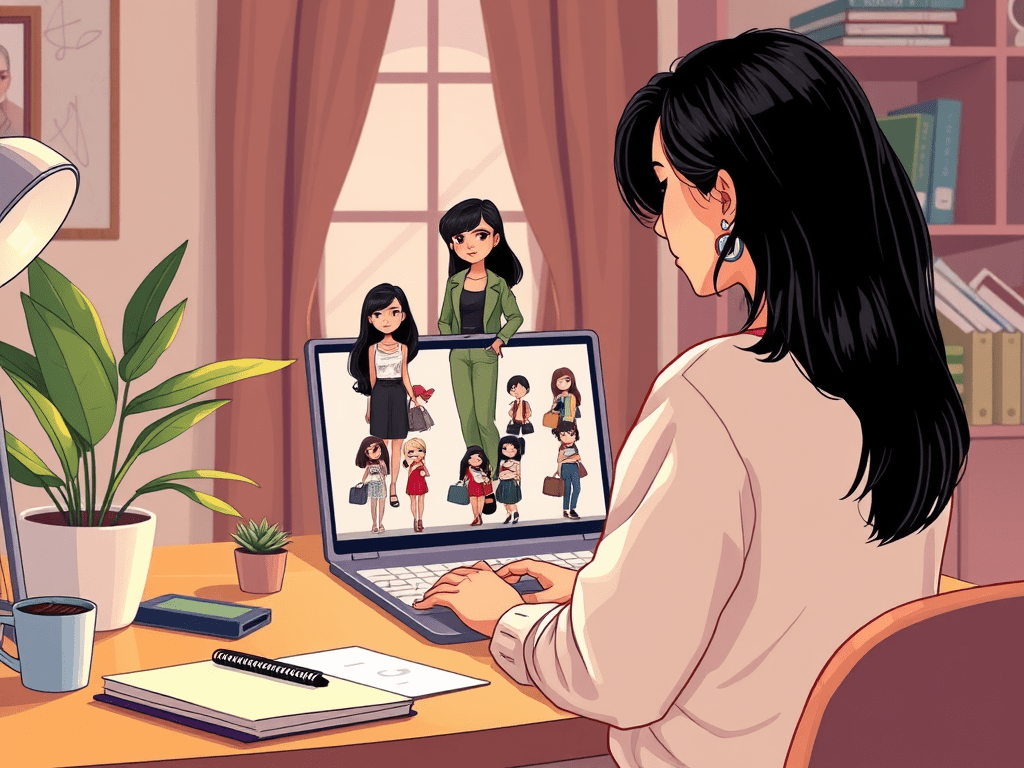
I wanted photos that looked great but still looked like me. So when Katya’s AI twin training launched, I waited until payday and invested. That weekend I dived into the training and created my own AI twin — and OMG… I’m obsessed!
Photoshoots Without Leaving My Desk
Since then I’ve done virtual photoshoots of me in London, India and Birmingham. I’ve created images of me in parks, cafés, reading books, working on a laptop — and so much more.
Even though the images are AI, they’re 95% me. Yes, maybe a bit slimmer and with better dress sense, but they keep my natural skin tone, my hyperpigmentation and everything that makes me…me.
They’ve also shown me my potential — what I might look like if I lost a little weight or brought more colour into my wardrobe. Most of all, they’re images I’m genuinely happy to post on my social media platforms.
One of the first places I used an AI twin image was on TikTok. I posted a series of four images from when I was 20 through to my AI twin. That video went viral — over 100,000 views in 24 hours! The comments flooded in: some unkind, but the majority were absolutely amazing.
It even caught the eye of an Asian podcaster who offered me a guest spot on her YouTube podcast. We’ve spoken on the phone and I’ll be recording with her next month.
What My AI Twin Has Given Me
That one weekend of creating my AI twin didn’t just give me pretty pictures; it gave me confidence. For the first time in years I felt excited to put myself out there again without hiding behind stock photos or old selfies.
Using my AI twin has also saved me hours of time and money on photo shoots, and it’s helped me show up more consistently online. As a busy author, blogger and mum, that’s priceless.
If you’ve ever felt shy about being on camera or thought professional photos were out of reach, this kind of AI tool can be a game-changer. You still get to control how you look, you can keep your authentic features, and you can experiment with styles you might not dare to try in real life.
I’m so grateful to Katya for creating a programme that blends creativity with tech. It’s helped me fall back in love with content creation and reminded me that showing up as your real self — even an AI version of you — is more powerful than perfection.
This is just the beginning of my journey with AI. I’m planning to use my twin for future blog posts, book promotion and maybe even my next podcast guest appearance. The possibilities are endless — and for a tech geek like me, that’s the most exciting part.
One of my most endearing qualities is my kind heart and my willingness to go the extra mile for others. I’ve always been the type of person who helps out without expecting anything in return.
Sadly, this is a trait my family either never noticed—or if they did, they never appreciated. But the world outside my family? They’ve always seen it. And that makes me proud.
How My Work Team Made Me Feel Valued
I currently work as an administrative caseworker in the Civil Service. My job is fairly simple on paper: checking application forms, ensuring the information matches our scanned system records, and fixing small errors like spelling mistakes or missing sections. It might sound basic, but I love what I do—and more importantly, I love my team.
We’re a team of ten, and honestly, it feels more like family than colleagues. We chat, share gossip, enjoy team meals (under the excuse of “team meetings”), and help each other out when things get tough. That support is what makes us so great together.
One key part of our role is keeping our task lists up to date. These include cases where information is missing or a scanned page didn’t come through. We have to chase missing details by contacting customers or checking physical files. Any incomplete work goes onto a priority task list, which gets flagged as deadlines approach.
Usually, I clear 4–8 high-priority tasks a day, but some days are impossible—like after a bank holiday when we’re swamped with calls.
The Day I Needed Help (and Got It)
Last week, our main manager was off, and one of my colleagues stepped in as acting manager. He sent a message reminding us to update our task lists because he’d be checking them.
When I looked at mine, my jaw dropped. Two and a half pages of high-priority tasks—about 50 cases. And I had only 2–3 hours to work on them before my early Friday finish. Plus, I was still taking calls.
I messaged him straight away, saying, “There’s no way I can get through all this, but I’ve started working on them.” He told me to do my best and ask for help if needed. Without hesitation, I replied, “I need help.”
I worked through about 10 cases before getting stuck on a 25-minute call. When I refreshed my list, I was stunned—my priority list was down to half a page. My acting manager had jumped in and cleared most of it for me!
Then he messaged me: “Your task list is up to date, but please review one case—I think there’s an error.” Turns out, I hadn’t made a mistake; I was just waiting on a filing department response. He even emailed the head of that department to chase it up, cc’ing me so I could see the progress.
He didn’t have to do that. He could have told me, “It’s your responsibility—do what you can.” But he didn’t, because we’re that kind of team. And maybe because he knows that I’m always the first to help others when they need it.
Where This Helpful Nature Comes From
This isn’t new for me. I’ve been like this since my first proper job at a bank in London.
I still remember November that year when my branch manager asked me to organize Secret Santa. She probably expected something basic like slips of paper in a bowl. Instead, she got beautifully designed name cards in sealed envelopes. She was so impressed that I became the official Secret Santa organizer every year after that.
I did eight Secret Santas in ten years (I was on maternity leave twice—one for each of my daughters). Every year, I outdid myself. My last Secret Santa even included mini origami Santas as gift tags. Word spread across North London branches, and three other branches asked me to make them too! They even covered the material costs.
After that first Christmas, my reputation was set—I was “the helpful one.” If something needed doing that didn’t involve tills, I volunteered. Whether it was loading ATMs, handling money deliveries, or even testing ATMs’ audio systems with headphones (yes, that’s a real thing!), I did it.
And when it came to the dreaded annual tests, I helped everyone—cashiers, personal bankers, even managers—because after failing twice early on, I memorized all the answers!
How It Shows Up in My Current Job
This helpful, friendly attitude has followed me to the Civil Service.
At first, our team had a rule: your birthday month meant organizing the next person’s birthday. When my birthday came, I organized the next one—and then volunteered for the next…and the next.
By November, I had also volunteered for Secret Santa (of course!). Just like at the bank, I wowed everyone with creative name tags and envelopes. From that moment on, I became the unofficial social events organizer—team birthdays, festive events, team-building activities—you name it.
I’ve organized almost every single birthday since joining the team in February last year. (Except for one person whose birthday is in September—my month. I draw the line there!)
Even when I try to take a break, I get roped in—like now. I was supposed to be event-free this September, but guess who’s booking the venue for the team meeting? Yep, me.
Why This Means So Much to Me
I have a great reputation in my team and even among other managers as someone who is always willing to help. And honestly? I love that.
My family may never have appreciated my caring, helpful nature—but my colleagues do. And that’s something I’m incredibly proud of.
Judging people before truly knowing them is something I know all too well. I’ve been judged my entire life—my surname, my looks, my weight, even the smallest things. The harshest judgments didn’t come from strangers, though; they came from my own family. But we’ll get to that later.
Judgment isn’t unique to one culture—it exists everywhere—but in Indian culture, it often feels like a family affair. When someone judges you, they usually drag your parents into it too.
Take this example: I can’t cook Indian food. My mum tried teaching me, but I wasn’t interested—I never loved Indian food. When my extended family discovered this, they didn’t just judge me; they judged my parents for “failing” to teach me. The same thing happened when I became a parent.
When Maanvi wasn’t potty trained by the age of three, the comments started:
“My child was out of nappies by two.”
“Still in nappies? Does she want to stay a baby forever?”
And then came the judgment aimed at me:
“You’re lazy. You’re not putting in the effort.”
The truth? I started potty training at two and a half. But Maanvi began forcing herself to pee every 20 minutes because she thought that’s what was expected. So I stopped. I waited until she was ready. At four, she trained in a week—with only three accidents.
Everyone learns at their own pace. There’s no universal deadline for milestones. Yet, as parents, we feel pressured, compared, and judged. And as individuals, we’re often judged for things beyond our control—like our skin or our weight—or for choices we make for our own well-being.
When Judgment Crosses the Line
I once read a post on an Indian parenting forum. A new mum asked if she could extend her parents’ visa to stay longer after helping her with the baby. Most responses were helpful—except one.
This one commenter accused her of using her parents as babysitters, saying things like:
“If you can’t handle your baby, hire a nanny.”
“Parents shouldn’t be called over—they have a better life in India.”
That comment hit a nerve. Why? Because I had done exactly what she was criticizing. My in-laws came to the UK after both my girls were born, and I’m not ashamed of it. They were my lifeline during those early months when I battled postnatal depression—twice. They encouraged me, supported me, and gave me the strength to be the mother I wanted to be.
Their visits didn’t steal their freedom—they still had the life they loved in India. They now enjoy the best of both worlds: quality time with us via regular video calls and their community back home. Everyone wins.
The Nosy Neighbour Syndrome
Indian communities take “it takes a village” to the next level. Growing up, I saw how connected everyone was. Back in my dad’s village, I could roof-jump from one house to another, wander into strangers’ homes, and no one blinked an eye—because my dad was part of the community. They even looked out for me.
But the same people who once cared later judged me harshly when I developed eczema as a teen. Suddenly, I wasn’t welcome. They feared they’d “catch” my condition.
It didn’t hurt much when strangers judged me. Their opinions didn’t matter. But when it came from people I knew—my own family—that was different.
Family Judgment Hurts the Most
I’ve written before about my sisters-in-law—especially my youngest brother’s wife—who seemed to despise me. Most of the judgment I faced was because of my skin. Severe eczema since I was 14 left dark patches on my face and arms. People assumed it was contagious.
Then there was my weight. Many assumed I was lazy or addicted to junk food. The truth? As a child, I was given cod liver oil tablets, and my body reacted by piling on weight rapidly—tripling in size in six months. No diet or exercise worked long-term.
The only time I lost significant weight was during a four-month trip to India for herbal treatment in my 20s. The “diet” was so strict I survived on powdered medicine and one chapati a day—no dairy, no proper meals. I dropped 10 kg in two months but was so weak I could barely function. And yes, the weight crept back when normal life resumed.
Judgment from non-Indians often came as backhanded compliments or subtle digs. Indians? Brutally direct. “What happened to your skin? You used to be so pretty.” Those comments cut deep.
The Bright Side: Kindness Exists Too
Not everyone judges. My husband’s family has been nothing short of amazing. My in-laws treat me with love, respect, and zero criticism. They compliment me, encourage me, and make me feel valued—something I rarely experienced growing up. Their words build me up instead of tearing me down.
The other day, they told me, “You light up a room wherever you go.” I carried that compliment with me all day. I wish my own parents had said things like that.
Breaking the Cycle for My Daughters
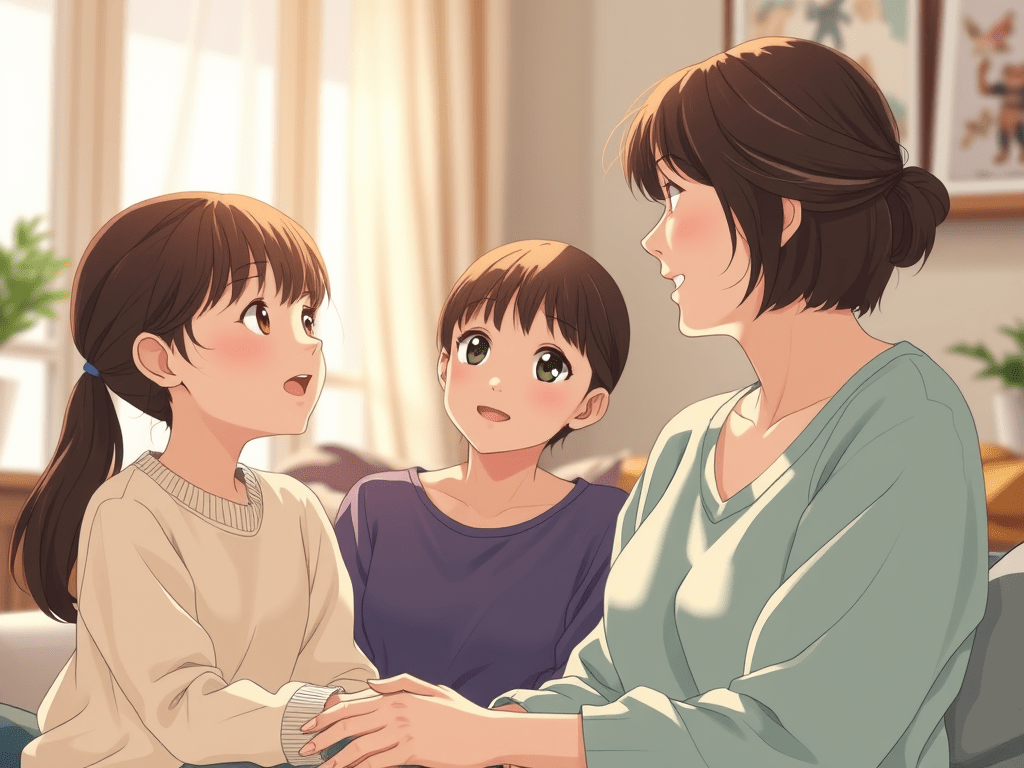
Because I grew up in an environment where compliments were rare and judgment was constant, I vowed my daughters would never feel “less than.” I make it a point to praise their efforts and celebrate their strengths.
Maanvi: Becoming Her Own Person
Maanvi is no longer the little girl people judged for being “late” with potty training. She’s on the edge of a whole new chapter—starting Year 7, moving into secondary school, and slowly stepping into her teenage years.
She’s curious about her appearance now, experimenting with hairstyles and dabbling in makeup, which makes me smile because it reminds me of my own growing-up years—but with a lot more confidence than I had. Her taste in TV shows has matured too; she’s all about series like Wednesday and Doctor Who, which spark conversations about independence, identity, and what it means to be different.
Of course, with growing independence comes growing emotions. She has her moody days (don’t we all?) and moments where she wants her space. And as much as it tugs at my heart, I know this is healthy—it means she’s finding her voice. My job is to guide her, especially when it comes to big things like mobile phone safety and understanding the digital world.
We’ve also started teaching her basic life skills, like cooking simple meals, because independence isn’t just about having a phone or walking to school alone—it’s about knowing how to take care of yourself. It’s a balance between letting go and holding on just enough to keep her safe.
Jiya: The Free Spirit
Jiya is thriving as she gets ready to start Year 3. She’s my social butterfly—always chatting, making friends, and charming her teachers at every parents’ evening. She’s fiercely independent in her own way and loves trying to do everything by herself (even when she needs help).
She’s creative, playful, and full of energy—the kind of child who turns the simplest day into an adventure. And though she and Maanvi still have their epic sibling squabbles, they also share moments that melt my heart, like teaming up to put on an impromptu dance show or giggling together over a silly joke.
Watching Jiya grow reminds me that confidence starts young, and I want her to hold on to that fearless spark for as long as possible.
Final Thoughts: Judgment Is Inevitable—But It Doesn’t Define You
Life will always have judgmental people. I can’t change that. But I can raise my daughters to be confident, resilient, and unapologetically themselves. That’s the best defense against judgment—and the greatest gift I can give them.




 Usha Singh-Das | Breaking Free