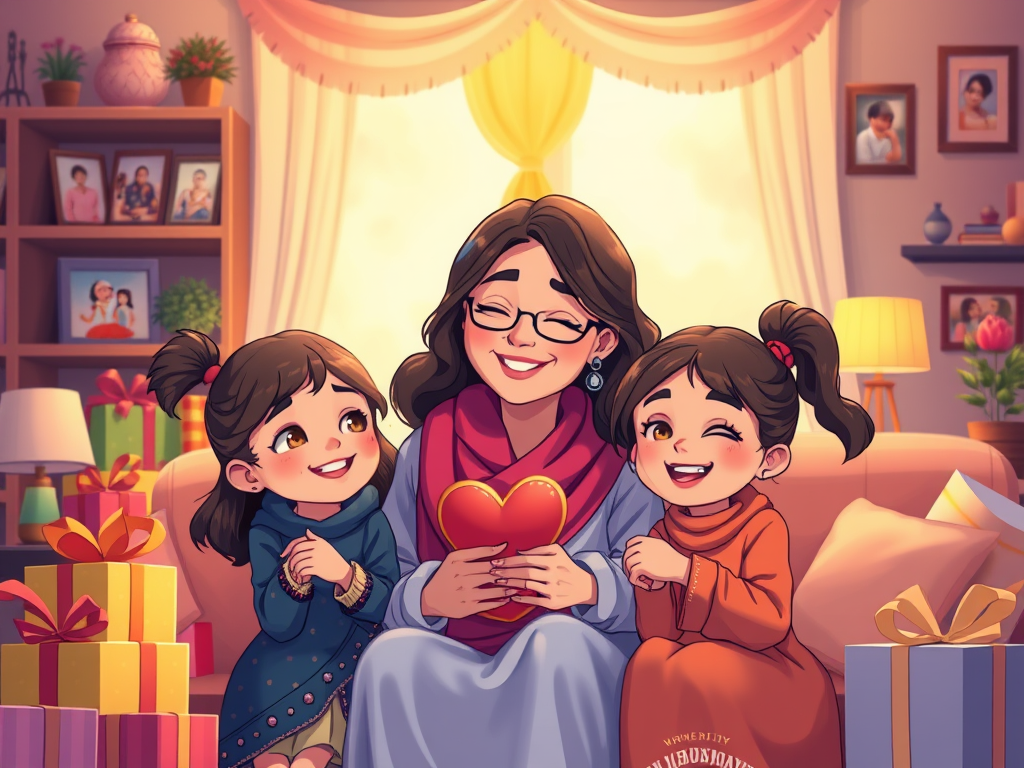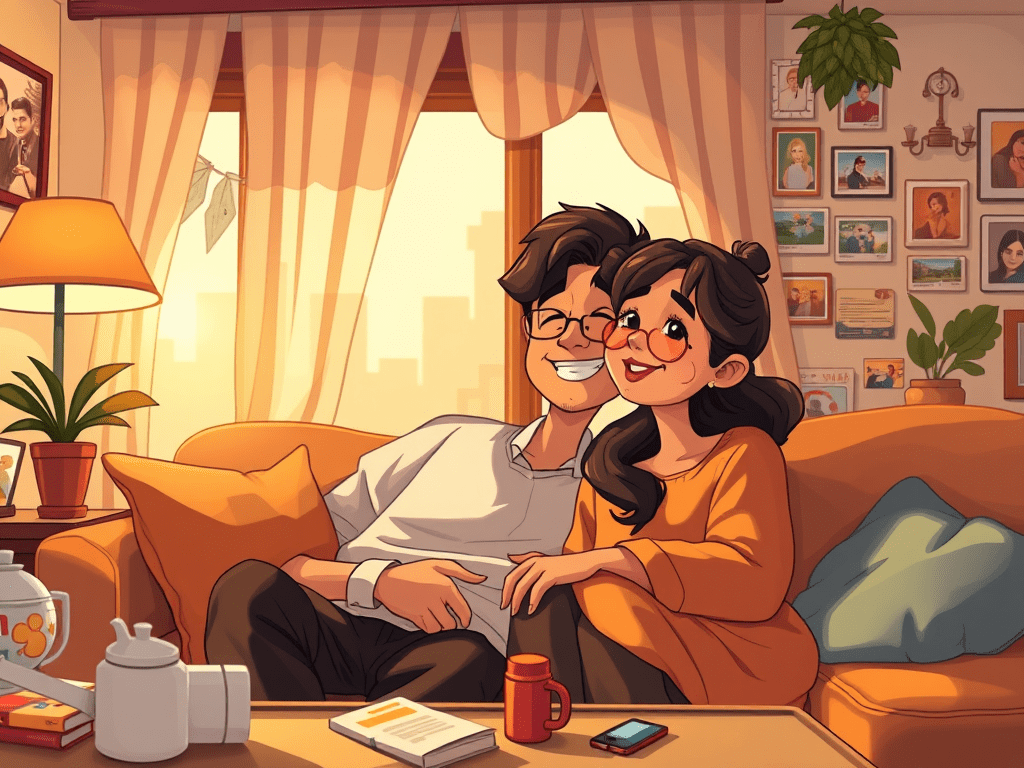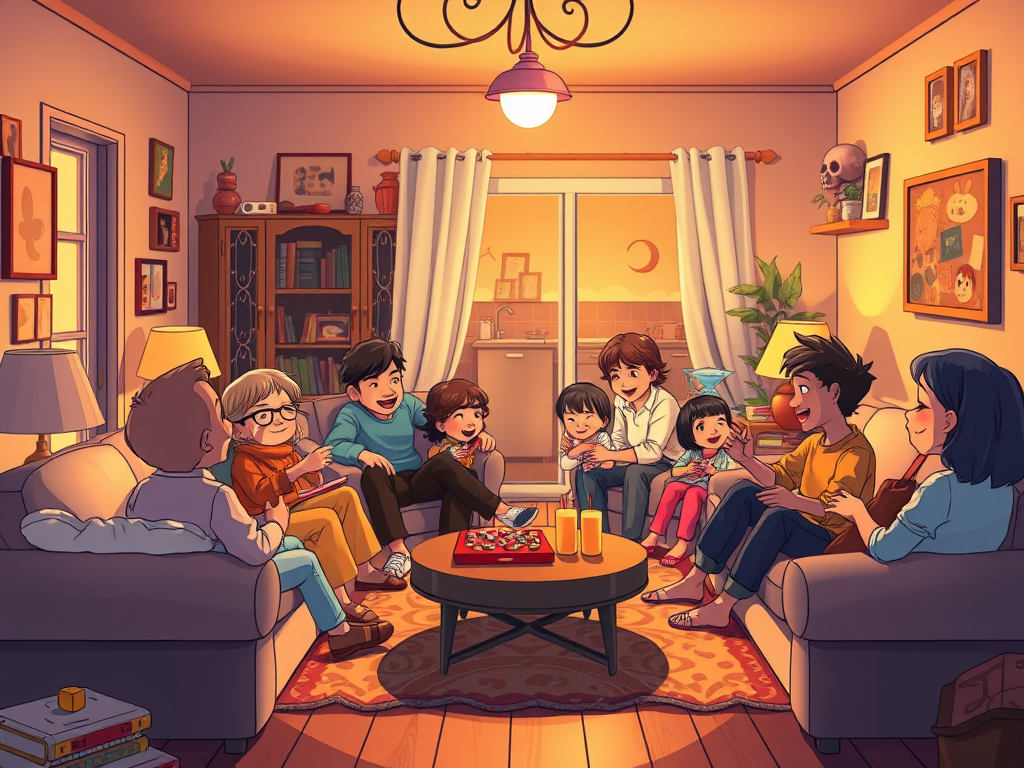
Living with Extended Family: How We Made a Full House Feel Like Home

It’s been a while since my last blog post — life has become much busier than usual. Our modest three-bedroom home suddenly became overcrowded, and we’ve been living like this for nearly five months.

The reason? One evening, my husband’s cousin arrived at our doorstep with her two children. She was going through a difficult separation and had left her husband. Her children, a 14-year-old son and an 11-year-old daughter, moved in with her.

Since we’re the only family she has nearby, we were more than happy to help. I know all too well what it feels like to walk away from your home with no plan, just uncertainty.

Back in 2012, my husband and I walked out of my parents’ house. Technically, it was also my home — I was listed on the land registry, having been added as an adult for inheritance purposes. But after years of tension with my father, things became toxic. One evening, following a breakdown, my husband said we couldn’t stay any longer. We packed a bag, called my brother, and moved in with him and his family. It was a sudden transition — much like the one my husband’s cousin, let’s call her “J,” is experiencing now. The only difference was, we didn’t have children at the time.

My brother’s three sons had to give up their bedroom so we could have a space. Similarly, our daughters have given up their room for J and her children. But here’s the biggest difference: My sister-in-law deeply resented our presence, while I have done everything in my power to make J and her children feel welcome in our home.

My brother, his sons, and even my sister-in-law’s mother were kind to us. Both my husband and I were working full-time and only around during evenings and weekends. We made every effort to be helpful and stay out of the way — doing chores, engaging with the family, and being respectful of their time and space. Still, I never felt at home. My sister-in-law’s coldness made our short six-week stay feel much longer.

During that time, we were actively searching for a flat — not just a room, but a place of our own. We’d both previously shared homes with others and knew that, as a married couple, we needed our own private space. A few properties fell through, but we remained hopeful. That stressful, transitional period stuck with me — and it’s exactly what I didn’t want J to experience under our roof.

Before she moved in, I barely knew J — we’d met maybe five or six times over 14 years, usually when my in-laws visited from abroad (her dad and my mother-in-law are siblings). But from the moment she arrived, I made a conscious effort to support her emotionally, not just logistically.

I planned movie nights, rewatched old favorites with her, and made her feel included — like family. She’s told me more than once that if it weren’t for me, the past few months would have been unbearable. Knowing that I’ve helped ease her burden, even slightly, means the world to me.

Of course, there have been challenges. The sleeping arrangements aren’t ideal. J and her two children are in what used to be our daughters’ bedroom. Our younger daughter, Jiya, now shares the small box room with her dad (my husband), and our eldest daughter, Maanvi, sleeps in my room with me.

You might wonder why the kids aren’t all in the same room, or why J didn’t take the box room. The truth is, the box room is too tiny for three people — it only fits a double bed and a small side table. J’s kids also need space for clothes, school supplies, and some semblance of personal room. As for separating the girls, Jiya can be quite sensitive about her space while sleeping — she’s the type to wake up and complain if someone rolls too close. So as parents, we decided to split the girls and each take one.

This setup has created a few small issues — like our daughters’ clothes still being stored in their old room, now occupied by J and her children — but we’re figuring it out day by day.

One unexpected silver lining has been the bond forming between the kids. My daughters now have playmates, and their cousin has become a big sister figure — teaching them how to bake, apply makeup, and do crafts. The laughter and creativity echoing through the house has been uplifting. It’s the most fun they’ve had in a long time.

April was a month of celebrations: Maanvi turned 11, her godmother Nadia celebrated her 60th, and their cousin turned 12 — which meant a lot of cake and even more sweet memories.

Final Thoughts: Finding Grace in Chaos

So yes — life is hectic. The house is full, space is tight, and sleep is sometimes elusive. But despite the chaos, I wouldn’t change a thing. Hosting extended family after a separation isn’t easy, but it has taught me so much about empathy, patience, and the quiet strength that comes from showing up for others.

Years ago, I promised myself that if I were ever in a position to help someone the way my brother helped me — but with more warmth and compassion — I would do it wholeheartedly. And today, I can say with pride that I’ve kept that promise.

Because at the end of the day, home isn’t just four walls — it’s the love, support, and grace you extend to the people within it.
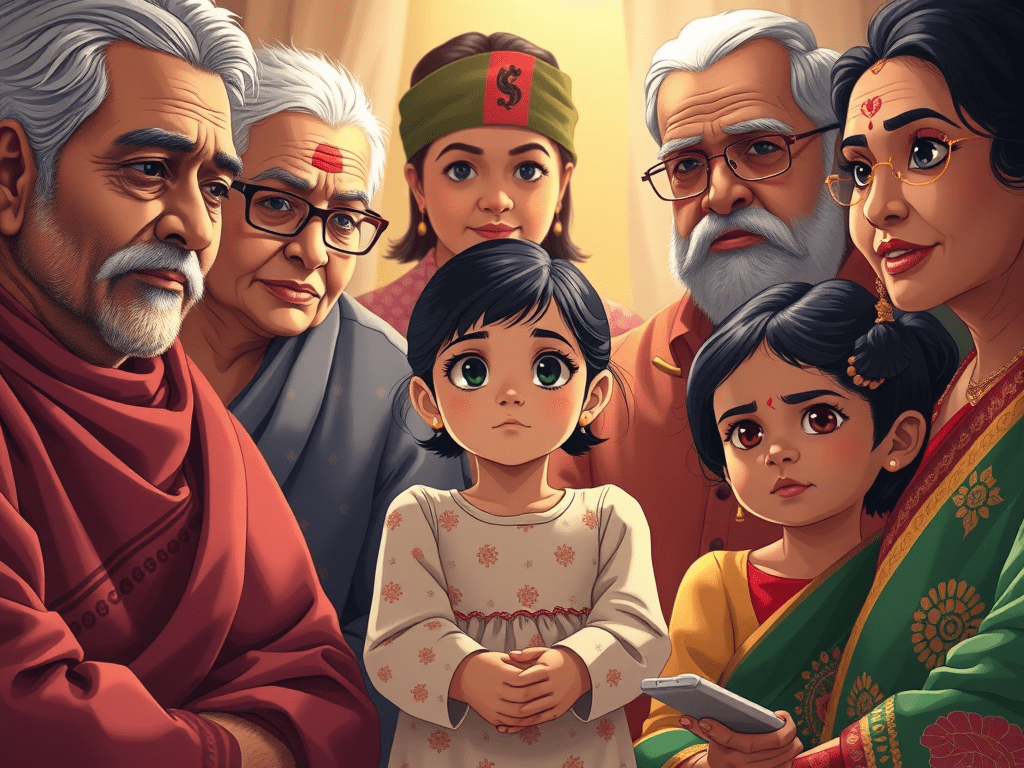
Cultural Expectations and Family Dynamics

I always knew my family was different. While most kids grew up with siblings close in age, I was the baby of the family—by a lot. My sister was nearly 16 years older, and my brothers were even older than her. Instead of growing up with playmates, I was raised by what felt like four extra parents.

The first eight years of my life were golden. I was the pride and joy of the household, adored and doted on by everyone. Being the youngest, I was spoiled rotten, and for a while, I genuinely believed I could do no wrong.

My family’s story, though, began far from London. My parents and siblings were all born and raised in India. My father, a member of the Indian police force, came to the UK on a diplomatic assignment in 1969. What was supposed to be a short stay turned into a permanent move. He remained in the UK for a decade, eventually securing citizenship before bringing my mother and siblings over in 1979. I was born two years later.

From the stories I’ve heard, life wasn’t easy for my mum during those years apart. They lived in a rural village in Haryana, with no phones, no post office, and definitely no cars. It was the kind of place where camel carts were common, women covered their faces in front of elders, and running water was a luxury. Being a woman with a husband overseas and no clear communication must have been isolating. But somehow, my mum made it through, and the family was finally reunited.

Like many immigrant families, my parents brought their culture with them to the UK. Indian values shaped our home life, but what I didn’t understand as a child was how controlling my father could be. He wasn’t abusive, but his word was law. My mum rarely left the house and never learned to read or speak English, even though other women in the community were integrating and working. Still, she seemed content—my father and brothers earned enough to support the household.

My siblings carved different paths. My sister, I later learned, attended school briefly, defying norms by wearing trousers instead of the skirt required by her uniform. I remember her running a shop in London, and she’s been in retail ever since. My brothers took more hands-on routes—one in a furniture factory, the other helping at my dad’s Indian restaurant.

As a kid, though, I didn’t care what anyone did for work. I just wanted to play. My younger brother and I were especially close. He let me ride between his legs on his skateboard, we had epic snowball fights, and he showed off his nunchuck skills like a mini Bruce Lee. He was the cool older brother and easily my favorite.

My older brother, on the other hand, was a mystery. Quiet and reserved, he faded into the background—especially around Dad. I don’t even remember him sitting at the dinner table when Dad was there. It wasn’t until I was nearly 20 that I began to understand the subtle hierarchy and tensions that existed in our home.

Despite our conservative upbringing, there were odd exceptions. No one forced me into the kitchen or told me I had to cook. My sister and I were both tomboys—something my dad may not have loved, but tolerated. We also broke with certain traditions, like eating meat, though beef was always off-limits due to Hindu beliefs.

I was a fussy eater, living mostly on plain bread and Hula Hoops crisps until I was eight. My mum didn’t cook much Indian food—maybe because she was used to open-fire cooking back home and never adapted to kitchen appliances here. Whatever the reason, I was content. I was adored, and that was enough.

But everything changed the summer I turned eight.

In 1989, both my brothers got married in India. I was still the center of attention—this British girl in fancy Western clothes speaking Hindi with a London twang. I remember being paraded around, people marveling at the “girl born in London.” It was overwhelming and, honestly, scary.

I have two vivid memories from those weddings: riding the ceremonial horse with my brother and refusing to leave the stage during the ceremony. I was still Dad’s little star, after all.

But when we returned home, things began to shift. I adored my new sisters-in-law at first—especially Chitra, my eldest brother’s wife. She was warm, gentle, and maternal. Abhilasha, my younger brother’s wife, was just 16—only nine years older than me. Her immaturity and desire to be loved like a daughter clashed hard with the reality of being a daughter-in-law in an Indian household.

She saw how Dad treated me—the baby of the family, his pride—and resented it. And that resentment turned into jealousy, which eventually turned into bullying. She couldn’t challenge my parents directly, so she took it out on me. That marked the beginning of what became a 25-year cycle of emotional manipulation and belittling.

Looking back, my childhood was equal parts joyful and complicated. I grew up loved, yes, but also in the shadow of cultural expectations, silent tensions, and roles we never asked for—but had to play anyway.

Reflecting on Motherhood: My Personal Journey

With Mother’s Day now over a week behind us, I’ve taken a moment to reflect on my own journey of motherhood—and to think about the kind of mum I believe I am.

But before diving into all that, let me tell you a little about how Mother’s Day went for me this year.

A Special Mother’s Day at Church

Sunday morning started with church. My husband goes every week, and the girls usually attend when it’s Sunday School. But this weekend was different—Maanvi was asked to take part in the service and do a reading. So the whole crew came along: me, my husband, Jiya, my husband’s cousin (who’s currently staying with us), her children, and of course, Maanvi.

She was brilliant. Even though she was nervous about speaking in front of everyone, I reminded her this wasn’t her first time. She’s taken part in plenty of events at both church and school and always done wonderfully. This time was no different—despite stumbling on a few words, she kept her composure and did an amazing job.

When we got home, Maanvi and Jiya surprised me with a big wicker box for Mother’s Day. Inside were two Easter eggs, shampoo, conditioner, and hand cream. Simple, but so thoughtful. I loved that they’d put in the effort to make me feel special.

The Early Days of Motherhood

Becoming a mum hasn’t been an easy road for me. As those who’ve read my book will know, I cut ties with my side of the family years ago. So when Maanvi was born, I had no one to support me except my husband. Two first-time parents with zero experience, completely thrown in at the deep end from day one—add postnatal depression into the mix, and those early months were incredibly tough.

I still remember our first night at home with Maanvi. She was just two days old. Breastfeeding had been going well in hospital—she was latching on, and I felt such a deep connection with her. Even though I was absolutely exhausted after nearly three days in labour and a sleepless night post-birth, I was just happy to be home, starting our life as a family.

But the universe had other plans.

Struggles with Feeding

What I didn’t realise at the time was that colostrum—the first milk—only lasts for a short while before regular milk comes in. For me, there was a delay between the two. That first night at home, Maanvi wasn’t getting any milk. She cried all night because she was hungry, and by the next morning, she had lost 11% of her birth weight. We found out when the midwife came to check on us.

She was immediately admitted back into hospital. Less than 24 hours after being discharged, we were back. Maanvi was put on the children’s ward, given her own room, and fitted with a nasal feeding tube. She spent two weeks there and even had her first Easter in hospital.

Once she came home, we faced a new challenge—what we thought was “reflux”.

As new parents, we were advised to start with 1oz of formula per feed, increasing by half an ounce when she finished the bottle. The issue was that Maanvi didn’t have the ability to recognise when she was full—so she would finish every bottle, no matter how much we gave her. By the time she was just four weeks old, she was drinking 5–6oz per feed. Her tiny stomach simply couldn’t handle that much, and she would throw up after nearly every feed.

She was misdiagnosed with reflux. It wasn’t until she was four months old and I trusted my instincts—taking her to A&E—that a doctor finally explained what was really happening. I was unintentionally overfeeding her.

We adjusted her feeds after that, but the damage was done. Vomiting became so routine that it no longer raised concern. Even now, she’ll sometimes throw up if she eats too much—we’ve learned to monitor her food intake closely, as she still doesn’t recognise when she’s full. Thankfully, her dad and I can usually tell when she’s had enough.

A Smoother Journey with Our Second

Raising Jiya, our second-born, was a different experience. My in-laws were around to help, and although she arrived early and spent her first two weeks in the neonatal unit, we didn’t have the same feeding issues.

By six months, we started her on solids, and by two years, she had caught up with all her developmental milestones. She was thriving.

Finding My Way as a Mum

Motherhood hasn’t come naturally to me. I didn’t grow up with a strong maternal figure and have had to figure it all out myself—learning to trust my instincts, navigate every challenge, and find my own rhythm as a mum.

Now, with Maanvi nearly 11 and Jiya 7, I know this journey is far from over. They’re still children, and there’s so much more ahead. But looking back, I’m proud of how far we’ve come.

I may not have had the most conventional or supported start to motherhood—but I’ve built something strong, filled with love, resilience, and learning.

Embracing a Young Mentality in Your 40s

I recently came across a meme that read something like:

“I’m at the stage in life where my brain thinks it’s still in its 20s, but my body says, ‘Are we dead yet?’”

That pretty much sums up how I feel in my 40s. Mentally, I’m convinced I can still rock 3-inch heeled boots all day, stay up until 1 AM, and bounce out of bed the next morning like I did in my 20s. But my body? It’s a different story — lower back pain, hip aches, and relentless fatigue have me slouching on the couch every weekend, with barely enough energy to get through my to-do list.

Living with a Forever 20s Mentality

Despite what my body tells me, I know I’ll never grow out of this youthful mindset. And honestly? I’m okay with that. After years of feeling like I missed out on my carefree teenage years, this “forever 20s” mentality is how I’m reclaiming the time I lost.

Most people spend their teenage years experimenting, partying, dressing up, and living in the moment. I didn’t get that chance. Sure, I did the whole late-night cramming-for-exams thing in university, but pulling an all-nighter? That happened only once — the night before submitting my final dissertation.

Growing up, I had to be responsible far too early. When my brother had kids, I was expected to step up and help. “Grow up and set an example,” they said. And I did. Being raised by narcissistic parents only reinforced the pressure to act older than I was. Baggy clothes, boyish outfits, and a distinct lack of self-expression became my norm. I was a tomboy — not by choice, but because I never had the space to explore my femininity.

Reclaiming My Youth, One Outfit at a Time

It wasn’t until I met my husband that my style evolved. Slowly, I swapped out the oversized hoodies and sneakers for dresses and more feminine looks. Don’t get me wrong — I still love my comfy jeans and trainers, but I’ve found balance. You’ll often see me in a hoodie with a high ponytail or pigtails, rocking some statement earrings. And when the occasion calls for it, I’ve built a wardrobe of beautiful dresses and elegant Indian outfits that make me feel amazing.

But mentally? That teenage spirit remains.

The Confidence (and Consequences) of Heeled Boots

One of my signature “youthful” moves was wearing heeled boots in my 20s. They gave me a boost of confidence — literally and figuratively. When I met Nitin, who’s about my height, I ditched the heels to avoid towering over him. For 15 years, those boots were left in the past.

Then came my 20-year university reunion. I wanted to dress up for the occasion, and my friend Dee helped me pick out a pair of 3-inch block heel boots — just like the ones I wore in my 20s. The moment I slipped them on, I felt invincible. I was glowing with confidence, chatting effortlessly with people I had barely spoken to during university.

But my feet? They were screaming. After just two hours, the pain was unbearable. I managed to fake my way through the rest of the evening, but as soon as I got home, those boots were sentenced to the back of the closet.

Round Two with the Heels

Fast forward to February. I was unexpectedly invited to a photoshoot at work — the kind that involves stock-style images for internal and external use. With only a day to prepare, I decided to bring the heels back for one more round.

The reality hit me quickly. From navigating stairs in those boots to awkwardly walking “slowly” for multiple retakes, my feet were miserable. By lunchtime, I gratefully swapped them for my comfy walking shoes. The day ended with me, back in my hoodie and pigtails, fully embracing the comfort I had denied myself earlier.

Why My Young Mentality Isn’t Going Anywhere

But my refusal to “act my age” goes beyond the occasional fashion choice. Every time Dee visits, it’s like we’re transported back to our 20s. We stay up late, laugh uncontrollably, watch movies, and share inside jokes. It’s a time capsule of joy — one I wouldn’t trade for anything.

I may not have had the freedom to enjoy my youth the first time around, but I’m making up for it now. My husband often teases me when I complain about my aches and pains, joking that I’m the young one while he’s the “old man.” Maybe he’s right.

Because as long as I believe I have my whole life ahead of me, I know there’s still plenty of time for dreams, adventures, and even the occasional pair of heels.

What About You?

Do you ever feel like your mind is stuck in your 20s while your body begs for a break? I’d love to hear your stories! How do you balance feeling young at heart with the realities of midlife? Drop a comment below and let’s chat!

Standing Up for Our Kids: A Mother’s Promise

There is one thing I will never understand about my family growing up—how my mum never stood up for me.

Now, as a mother of two girls, there is nothing and no one that will stop me from protecting them and keeping them happy. And it’s not just about the big things; I will fight for them over the small things, too—something my husband and an extended family member recently learned firsthand.

On World Book Day (6th March), my daughters’ school encouraged students to dress up as their favorite book characters or authors. Maanvi knew exactly who she wanted to be—the lead character in Letters from the Lighthouse. But Jiya found it harder to decide.

I gave her ideas: a modern-day Harry Potter, Matilda, the Karate Princess (a book I loved as a kid), or even dressing up like her sister, since Maanvi had been part of a book series when she was younger. But in the end, Jiya decided to be me—because I had written a book, and she was proud of that.

Honestly, I wasn’t sure if she chose me because she was genuinely proud or just wanted an excuse to wear jeans and a hoodie! Either way, the night before, I printed the front and back covers of my book onto white card and stuck them together, so she had something to take to school as part of her costume.

The next morning, I had to go into the office, so I wasn’t home to help the girls get ready. Luckily, my husband’s cousin, who was staying with us, was there to help. I assumed everything would go smoothly—until I received a photo at 7:20 AM.

In the picture, Jiya was wearing a fancy party dress, looking undeniably pretty—but not happy. She had a fake smile, but as her mother, I could see the sadness in her eyes.

My husband and his cousin tried to reassure me that Jiya was fine and liked the dress. But something didn’t sit right with me, so I called my husband’s cousin over video. The moment she answered, she started telling me how beautiful Jiya looked, how she was like a princess. But I didn’t care about that—I just wanted to talk to my daughter.

When Jiya appeared on screen, her fake smile was still there, but so were the tears in her eyes.

I simply asked her, “Do you want to wear jeans and a t-shirt?”

She nodded.

I told her to go upstairs and change—quickly—and to wear jeans, not leggings (even though she prefers them).

My husband’s cousin protested, saying I shouldn’t have told her to change, that she wouldn’t fit in if everyone else at school was dressed up. But I didn’t care. My priority wasn’t how Jiya looked to others—it was how she felt.

Jiya changed, took my book with her, and went to school happy.

The Realization That Changed Everything

That day, I had a moment of clarity: there is nothing I wouldn’t do for my kids. And no one—not family, not tradition, not expectations—will stop me from standing up for them when they need me.

Of course, I have limits. I know when to step back and let others guide my daughters, especially when it comes to discipline or important life lessons. There are a handful of people I trust with that responsibility—my in-laws, Dee, Nadia, and now my husband’s cousin—because I know they genuinely have my daughters’ best interests at heart.

But when I was a child, I didn’t have that kind of protection. My mum allowed others to dictate my life.

When it came to education, Mr. Gadvi had complete control over what I studied, even choosing my GCSE subjects—which meant I ended up taking subjects like art, which I was terrible at and which did nothing to help me grow.

When it came to raising me, that responsibility was scattered among everyone but my mother. As a child, my siblings played a huge role. As a teenager, I had to figure things out on my own. No emotional support, no guidance—just me, fighting my own battles, knowing that no one would back me up.

It’s no surprise that, at 14 years old, I fell into a deep depression. That I hit a point where I wanted it all to end—because I had no one to turn to.

And that is exactly why I fight for my daughters.

Breaking the Cycle

I tell my girls to always try their best, but I don’t let them fear failure. I encourage them to explore, take risks, and create memories they’ll cherish.

Their dad and I prioritize experiences—whether it’s residential school trips or small adventures—we make sure they have those opportunities, no matter what sacrifices we have to make.

Because I know what it feels like to be unheard, unsupported, and alone.

And I refuse to let my daughters ever feel that way.

The Power of Chosen Family: A Love Beyond Blood

One thing that always lingered in the back of my mind when I cut ties with my siblings and their families was that my daughters would grow up without cousins, aunts, and uncles who would love and spoil them. I worried they would miss out on the kind of family bond that comes from extended relatives.

But looking back now, I realize I was worrying for no reason. My daughters are surrounded by love, not because of family ties, but because of the incredible people who have chosen to be in our lives—our chosen family.

Nadia: The Godmother Who Spoils with Love

The first person who holds a special place in our lives is Nadia, my ex-manager and the godmother to both Maanvi and Jiya.

When I worked at the bank, Nadia was my manager, but she quickly became much more than that. She was the one person I felt completely comfortable around, someone I knew always had my back. I had other wonderful colleagues—Monica, Gill, and Phyliss—but Nadia was different. She was like the mother figure of our branch. As the assistant manager, she was often in the office more than the actual branch manager, so many of us turned to her for help, whether it was dealing with difficult customers or workplace challenges.

My relationship with Nadia, however, was unique. I can’t quite explain it, but she became my confidant. During the difficult times with my family, I would vent to her, and she would always listen calmly. Our bond grew even stronger after I cut ties with my side of the family, and she even helped me and Nitin financially when we needed it. Of course, we always paid her back, but her willingness to support us in those moments meant the world.

So, when Maanvi was born, it was an easy decision to ask Nadia to be her godmother. Since Nitin is Christian and Maanvi was to be baptized, it felt right. Over the years, Nadia has spoiled Maanvi endlessly, and when Jiya was born, she naturally became her godmother too—officially so after Jiya’s baptism last summer. If she’s unsure what to buy for the girls (since she only has adult sons herself), she simply transfers money into their savings accounts and asks me to pick something out. But no birthday or Christmas ever goes by without gifts from their favorite Aunty Nadia.

Dee: My Best Friend, My Sister, and My Daughters’ Maasi

The next person who plays a huge role in my daughters’ lives is Dee, my best friend from university. Dee and I have always been like sisters, so it was only natural that she would embrace my daughters as her nieces, just as I have done with her daughter.

What makes it even more special is that Dee’s daughter is just two years older than Maanvi. This means my girls have grown up alongside her, not just as friends, but as true cousins. They treat each other like family, and their bond is unbreakable.

Dee is another person who never fails to spoil my daughters. Every time she visits, she brings gifts for them. Jiya, in particular, absolutely adores her. In fact, I sometimes joke that Jiya might love Dee more than she loves me! They share the same sense of fashion, similar hobbies, and even a similar personality. When we’re out together, people often assume Jiya is Dee’s daughter, and honestly, if it were anyone else, I might feel a little jealous. But not with Dee.

Our relationship has always been one where my kids are her kids, and her kid is mine. We’re so comfortable with this dynamic that Maanvi has Dee’s number saved in her phone, and Dee’s daughter has mine. They call us whenever they need advice—sometimes about things they don’t want to discuss with their own mothers because, as they say, their Maasi (the Hindi word for maternal aunt) is way cooler than their actual mom!

Tabz: The Friend Who Insists on Giving

The newest addition to my daughters’ list of honorary aunties is Tabz, my friend from secondary school. Over the past two to three years, she has made it a tradition to send gifts to Maanvi and Jiya every Christmas. No matter how many times I tell her it’s unnecessary, she insists on sending something thoughtful that the girls absolutely love.

A Christmas to Remember

Thanks to these incredible women, my daughters had the best Christmas last year. The way everything worked out, it felt like they had four Christmases instead of one!

• On Christmas Day, they received gifts from us as parents and from their grandparents.

• On New Year’s Eve, Aunty Nadia’s presents arrived, slightly delayed due to the holiday postal rush.

• On New Year’s Day, Dee and her daughter came to stay for a few days and brought even more gifts.

• And finally, at the end of January, Tabz’s package arrived—one last surprise that extended the holiday season for them!

But it’s not just Christmas—this happens for their birthdays too. Every time one of these amazing women visits, my daughters receive gifts, love, and affection in abundance.

The Beauty of Chosen Family

Looking at all of this, I can confidently say that my initial worries were completely unnecessary. Yes, my daughters may not have their biological aunts, uncles, and cousins in their lives, but they are far from lacking love, support, and doting family members. In fact, they might just have the best kind of family—the one that’s chosen, not bound by blood but by pure love and unwavering care.

Nadia, Dee, and Tabz have filled the gaps in ways I never imagined. They’ve not only stepped into the role of doting aunties but have also given my daughters a sense of belonging, love, and connection that I once feared they would miss out on. Their generosity isn’t just about gifts—it’s about the time, effort, and thoughtfulness they pour into my girls, and for that, I will always be grateful.

If there’s one thing I’ve learned through all of this, it’s that family isn’t just about shared DNA. It’s about the people who show up, who love you unconditionally, and who make your children feel cherished. And in that sense, my daughters are truly blessed.

From People-Pleasing to Self-Acceptance: My Journey

Over the last few weeks, one thing has become abundantly clear to me—I am no longer the person I was growing up or even the person I was 10 years ago.

From People-Pleasing to Standing My Ground

I’ve always considered myself a people person. But in the past, that often meant I was more focused on pleasing others, even if it meant taking the blame for things beyond my control. I avoided conflict at all costs, sometimes to the point of making myself anxious at work, afraid of making mistakes or getting in trouble.

I remember when I worked at a bank, I had to ask my manager to be direct with me whenever they needed something. Phrases like “Usha, can I talk to you when you have a minute?” would immediately trigger anxiety. I’d spend the time before the conversation worrying about what I might have done wrong, only to find out they just needed me to take a late lunch or help with the ATMs.

This reaction was deeply ingrained in me. Growing up in a toxic household, I was hyper-aware of my surroundings, always on my best behavior to avoid conflict. I saw how my father put my siblings down when they didn’t behave as he expected, and I never wanted to be on the receiving end of that. As a result, I carried this fear into my workplace, constantly worried about letting people down.

Another thing that haunted me was the fear of making mistakes and looking foolish. I had been laughed at, called stupid, and made to feel small over minor errors or misunderstandings. This fear held me back from standing up for myself or admitting when I was wrong.

A Defining Moment at Work

But recently, I realized something—I’m not that person anymore. And I had two moments, on the same day, that proved it.

I’ve been with my current team for about a year, and I’ve built a strong reputation as a perfectionist, a fast worker, and a friendly, reliable colleague. That day, I started work at 6:10 AM (one of the perks of flex hours, since I needed to leave early for the school run). By 9 AM, I had already completed 30 cases—well ahead of my target. Since I was so far ahead, my manager asked me to handle file returns, a process where we return incomplete or incorrect applications to the sender.

As I was processing a case, I noticed that the original caseworker hadn’t followed the correct procedure. I flagged this to my manager, who agreed and asked me to email the caseworker and their manager, requesting that they correct their mistake.

Not long after, I received a slightly aggressive email in response, insisting they had followed procedure (which they hadn’t). The old me would have panicked, doubted myself, and possibly backed down. But this time, I felt something different—I was angry. I knew I was right, and I wasn’t about to be talked down to.

So, I responded firmly but professionally, explaining exactly what had been done incorrectly and why their justification didn’t hold up. I backed it up with the necessary evidence, pointing out that there was no recorded action to support their claims.

The best part? Twenty minutes later, I received another email from them thanking me for “clarifying.” And when I checked the case, they had gone back and processed it correctly.

I was so proud of myself for standing my ground. Ten years ago, I wouldn’t have had the confidence to do that.

Embracing Mistakes Without Shame

That same day, I also had a moment of pure silliness—and instead of feeling ashamed, I just laughed it off.

In my department, we work in units, and each unit has designated office days. At the end of January, we received a schedule listing office days from February through June. Since my husband and I plan around my office days for school runs and holidays, I always mark them on my phone’s calendar and send him a screenshot.

For some reason, when I was adding the office days, I completely skipped March. I didn’t notice the mistake and somehow convinced myself that I had no office days that entire month. I was even excited, thinking I could work from home and have an easier time with the school run.

So, for weeks, I confidently told my acting manager that I had no office days in March. He was skeptical, but I insisted I had checked the schedule properly. He just smiled and suggested I double-check.

And when I did? I realized I had overlooked an entire column. My unit did have office days in March.

The old me would have been mortified and spent the rest of the day feeling stupid. But instead, I just burst out laughing and admitted my mistake. My manager laughed too and reassured me that it happens to everyone.

Growth Is in the Small Moments

These might seem like small moments to most people, but to me, they symbolize how much I’ve grown since leaving my old, toxic life behind. I’ve learned to trust myself, stand up for what I know is right, and even embrace my silly mistakes without fear or embarrassment.

For the first time, I truly accept myself—flaws, strengths, and all.

15 Years of Growth: A Love Story

Last week marked 15 years since Nitin and I had our first date, and it got me thinking about everything we’ve been through together—the highs, the struggles, and the moments that have shaped us.

To be honest, it doesn’t feel like 15 years. It feels more like five or six.

I think the reason for that is because, in many ways, we’ve only truly been living our lives on our own terms for the last seven years, ever since we moved to the Midlands. Before that, life felt like it revolved around the legal case, constant fear, and the weight of depression. I didn’t feel safe, I didn’t feel happy, and looking back, I don’t think I even fully experienced motherhood the first time around.

The Early Years: Building a Life Together

When I think back to the early years of my relationship with Nitin, I do remember moments—some clearer than others. One of our favorite things to do was go to the movies, especially Indian films. Our nearest Indian cinema was a 35-minute bus ride away, but that didn’t stop us. It became our little tradition—every weekend, or at least once every two weeks, we’d go.

This was around the time when Nitin and I had moved out of the house I owned with my parents. We were on our own for the first time, living in a small one-room flat in Leytonstone, trying to figure out life as a couple. There was something exciting about that time—being young, being in love, and just enjoying each other’s company. But at the same time, we were also carrying so much emotional weight.

Looking back, I realize that even though we had great moments, we weren’t fully present in them. Life was stressful, and without realizing it, we were just trying to survive.

Motherhood and the Struggle to Connect

My relationship with Maanvi was always off to a rough start. I suffered from postnatal depression for over six months, and during that time, I felt so disconnected from everything—including my baby.

I was lucky to have support from the Parent-Infant Psychology (PIP) team, who worked hard with me to help me build a connection with Maanvi. I had weekly therapy sessions at home because I couldn’t even leave the house to go to their office. The weight of depression was too heavy, and it made everyday tasks feel impossible.

Because of this, I don’t have strong emotional memories of Maanvi’s early years. I know I was there. I know I held her, fed her, played with her, and loved her. The photos prove it. But unlike with Jiya, I don’t feel those moments when I look back. It’s as if they belong to another version of me—one I’ve worked hard to move on from.

The Turning Point: Moving to the Midlands

Moving to the Midlands was a turning point in our lives. It gave me a fresh start, away from all the toxic people I had ever known. That alone brought a sense of freedom that I had never felt before.

For the first time in years, I felt like I could create the life I wanted—a life that wasn’t defined by fear, sadness, or the past.

This move wasn’t just about geography. It was about breaking free from everything that had weighed me down—the negativity, the bad memories, the feeling of being stuck. I finally had space to breathe.

Rediscovering Love and Family Life

Over the last six years, Nitin and I have truly been a couple. We’ve lived our lives the way we wanted, without the burden of the past.

We finally got to experience normal family moments—taking the kids to the zoo, to the park, enjoying simple weekend outings. For the first time, we weren’t just going through the motions. We were actually living those moments.

As a couple, we also started setting goals and achieving them together. One of our biggest dreams was to own our first home, and last summer, we made that dream a reality. Buying our own home felt like the ultimate symbol of how far we had come—not just financially, but emotionally.

The Lost Memories of Love

While I have clear memories of these recent years, I still struggle to remember the early days of our relationship.

I vaguely recall our late-night texts when we first started dating, the excitement of seeing his name pop up on my phone. But when I try to truly connect to those emotions, it feels like they belong to someone else’s life.

When Nitin brings up stories from our time in London, like the time he broke the base of our Christmas tree while I was pregnant with Maanvi, I smile and nod. I remember the story because he tells it every year. But if I’m honest, I don’t remember how I felt in that moment. It’s a memory without an emotional imprint.

On the other hand, I clearly remember Jiya’s first Christmas. By then, we had moved to the Midlands. I remember holding the tiny premature baby clothes I had ordered, feeling both joy and shock at how small they were. I remember dressing her in her little reindeer outfit and feeling overwhelming love. I remember her sleeping through the New Year’s fireworks as Nitin and I watched at midnight.

I remember those moments because I was truly present in them.

Healing, Growth, and Looking Forward

Looking back, I don’t think we truly enjoyed being together as a couple for the first 9–10 years. Even though I know we had some incredible moments, the emotional detachment makes it feel like they happened to someone else.

But here’s the thing: healing takes time.

It’s easy to grieve the lost years, but I also recognize how much we’ve grown. The last six years have been ours—free from past burdens, full of love, laughter, and the ability to truly experience the present.

If I could go back in time and give advice to my younger self, I’d say:

“You will find joy again. You will feel love again. You will have the life you’ve always wanted—just hold on.”

And maybe that’s the lesson in all of this. Time moves forward, whether we’re ready or not. The past may be blurry, but the present is crystal clear. And that’s what truly matters.

The Complex Relationship with My Father: Love, Control, and Letting Go

Today, while at work, I came across a client with the same initials and surname my dad once had. His signature was about 60% similar to my father’s, and for a moment, it hit me—I missed him so much.

My dad was a narcissist. There’s no doubt about that. He ruled the house with his strict “my way or no way” mindset. But deep down, I know I was his baby girl. I saw glimpses of his loving side, even if they were rare. He also broke a few traditional gender norms for me—something I know my sisters-in-law resented when they married into our family.

Breaking Gender Norms in a Traditional Household

One of the biggest departures from tradition was that I was raised as a non-vegetarian. In many Hindu families, especially from my parents’ region, girls could cook meat if they chose to, but they weren’t supposed to eat it. My mother took it a step further and refused to even cook it. Yet, I vaguely remember my sisters-in-law making chicken curry when I was a child—though they never ate it. But I did.

Another tradition I escaped was that girls were expected to handle all the housework and cooking while the boys did nothing. That rule never applied to me. I remember my dad often telling my mom or my sisters-in-law that I was too young to be in the kitchen. Even when I was older, it was just me and my parents at home, so no one expected me to do anything.

Of course, I cleaned up after myself, but unlike my sisters-in-law, who had to cook and clean for everyone, I only took care of my own needs. This difference in upbringing made them resent me. I endured over 25 years of their bullying, but that’s a story for another time—it’s all in my book.

A Father’s Control, Not Unconditional Love

With my dad, things were complicated. He didn’t exactly bully me, but he didn’t love me unconditionally either. As long as I followed his rules and behaved the way he wanted, life was peaceful. Since that was the only life I knew, I never realized how controlling he was until I got married.

Unlike my siblings, I had a “love marriage.” I chose my husband, Nitin—he wasn’t picked by my parents. The reason for this was simple: my dad had seen my sister’s disastrous marriage. To put it mildly, her husband was useless, and her in-laws were mentally abusive—perhaps even physically, though I can’t confirm that since I was a child when she married. I only know she had it tough. If it weren’t for her strong mindset, she might not have survived that marriage.

I had heard stories of my dad and one of my brothers being beaten up by my sister’s in-laws. I had also heard stories of her being bullied. Yet, 30 years later, she remains in that marriage, raising their now-adult daughter.

Because of her experience, my dad made a deal with me: I would find my own husband. He knew I was sensitive, and if I ended up in a marriage like my sister’s, I might not survive it. So, when I started receiving marriage proposals at 16, he always had an excuse—first, that I was too young and needed to focus on my studies, and later, that I was a British-born girl beyond his control. By the time I graduated from university, it was clear that I would choose my own partner.

Finding My Own Path to Love

The search for my ideal husband wasn’t easy. God knows how many men I met. But I knew what I wanted, and I remained hopeful. Eventually, I found him.

Nitin and I didn’t have a typical Bollywood-style romance. In fact, I really didn’t like him when we first met. He was a player, cocky, and not very down-to-earth. But something about me intrigued him, and he kept begging me to meet up for a meal.

For over a month, I refused. Then, as Valentine’s Day approached, the hopeless romantic in me didn’t want to be alone. So, I finally agreed to meet him a few days before February 14—just in case it turned out to be a disaster. I didn’t want a bad date to ruin my Valentine’s Day.

But the universe had other plans.

Fifteen minutes into our date, I knew—I was going to marry this man. There was something about the way Nitin spoke about his parents and sister that felt right. Yes, he was a playboy who partied and chased women every weekend. But deep down, he was a decent, family-oriented guy. And I swear, I fell for him right then and there.

Of course, I didn’t tell him that. But something clicked, and from that moment, we were inseparable. We got engaged eight months later and married two months after that.

Marriage and My Father’s Wrath

That’s when the trouble with my dad started.

As the only child still living at home, and with Nitin’s parents in India, we decided that Nitin would move in with my parents to help take care of them. Most parents of daughters would be thrilled—they’d keep their daughter close and gain a son to share responsibilities. But not my dad.

Even though I was legally part-owner of the house, I always called it my parents’ home out of respect. But once I was married, my priorities naturally shifted. I was still the dutiful daughter—I did all the grocery shopping and paid all the bills—but I also wanted to spend time with my husband. I wanted to go to the movies on weekends, have a meal out, and enjoy the marriage I had fought for.

My dad couldn’t handle it. He refused to share me with Nitin.

Nitin, despite his past as a “bad boy” in India, kept quiet and bit his tongue to maintain peace. He worked hard, contributed to the bills, cooked for my parents, and even took on two jobs when I fell ill and had to reduce my work hours. Yet, my dad never saw the good in him.

All he saw was a man who had “stolen” his daughter.

The breaking point came after a massive fight. I had a complete emotional breakdown—I was shaking, crying, and broken. That was when Nitin lost it. He packed a bag, gave my dad a piece of his mind, and we walked out.

I saw my dad one last time when a friend tried to help us reconcile. But even though Nitin and I were willing to forgive and forget, my dad wasn’t.

He passed away four months later while on holiday in India.

The Good Memories Still Remain

Despite how things ended, I still miss my dad.

Our best times were in India. As an NRI, he was a big deal, and having a British-born daughter made him even prouder. In India, I was his princess. I sat in the front seat of his 4×4, went with him to meet important people, and was showered with attention.

Looking back, even those moments weren’t entirely about me—they were about him maintaining his reputation. I was part of his image, the perfect, obedient Indian daughter raised by his rules.

But despite everything, he was still my father. And I still miss him—especially our road trips in India

Embracing Imperfections: My Battle with Skin and Hair

I’ve never been someone who focused on appearances. To be honest, I’ve never had much reason to. Growing up with eczema and later losing teeth after my pregnancies, I became accustomed to ignoring the societal pressures of looking a certain way.

But recently, something unexpected has made me feel self-conscious for the first time in my life: hair loss.

Why I Never Cared About My Appearance

My teenage years were defined by my battle with eczema, a condition that left my skin dark, leathery, and extremely sensitive. At a time when most girls were experimenting with makeup and skincare, I couldn’t join in. Even to this day, I struggle with basic moisturizing creams because my skin is so reactive.

As I got older, things didn’t get easier. After giving birth to my daughters, Maanvi and Jiya, I lost 12 teeth due to a combination of pregnancy-related nutrient loss and my bad habits. I’ve always had a sweet tooth, but during my pregnancies, it went into overdrive. I drank cola like water, indulging daily without realizing how much damage I was doing to my teeth.

For those who don’t know, pregnancy can deplete your body’s calcium levels, as your baby takes what they need to grow. Combine that with excessive sugar intake, and my teeth didn’t stand a chance.

By the time my youngest was born, I needed 12 teeth extracted. While I was given dentures, they made me gag, so I eventually stopped wearing them. Missing teeth didn’t bother me—I could eat and talk just fine, and my self-worth was never tied to my looks. I wasn’t vain, so I didn’t feel the need to “fix” myself.

Why Makeup Was Never an Option

With my skin challenges, wearing makeup has always been out of the question. While makeup tutorials online show incredible transformations, I could never follow suit because:

         1.     My skin is too sensitive.

My eczema reacts to most products, and the itching from wearing foundation all day would be unbearable.

         2.     I can’t find the right foundation shade.

The eczema darkened my skin unevenly, leaving my face several shades darker than my natural tone. To make matters worse, my nose is much lighter—about eight shades lighter than the rest of my face. No foundation I’ve tried could even out my complexion without looking unnatural.

When Confidence Came Naturally

Despite these challenges, I was always confident. My skin and missing teeth didn’t define me, and the people around me valued me for who I was. I felt no need to hide my “flaws” because no one treated them as flaws.

Life was good. I learned to embrace my imperfections because they were part of who I was.

When Hair Loss Shook My Confidence

Then came hair loss, and for the first time in my life, I found myself feeling self-conscious about my appearance. Unlike my teeth or skin, my thinning hair made me feel exposed in a way I’d never experienced before.

My hair started thinning at the sides, leaving visible patches that I couldn’t ignore. To cope, I changed my hairstyle to pigtails, which help cover the hair loss on the sides of my head. While this has helped to some extent, I’m constantly aware of it.

For someone who’s never cared about looks, this newfound feeling of vanity is unsettling. I hate feeling this way, but I can’t deny it’s there.

How I’m Learning to Cope

What I’ve realized through this journey is that caring about how I look doesn’t make me vain—it makes me human. It’s okay to want to feel confident in my skin, even if that means taking small steps to adapt to changes like hair loss.

For me, pigtails are a way to regain some of that confidence. They allow me to minimize the appearance of thinning hair without losing myself in the process.

At the end of the day, my hair loss doesn’t define me. Just like my eczema and missing teeth, it’s another part of my story. I’m learning to give myself grace, to embrace the changes that come with life, and to remember that beauty is so much more than what we see in the mirror.

Final Thoughts

Hair loss, eczema, or missing teeth—none of these things determine my worth. What truly matters is the person I am and how I live my life. While it’s okay to care about how we look, it’s important not to let those feelings overpower the confidence we have in who we are.

For anyone struggling with similar challenges, know that you’re not alone. Whether it’s hair loss, skin conditions, or any other change, your imperfections don’t diminish your value. They make you human.