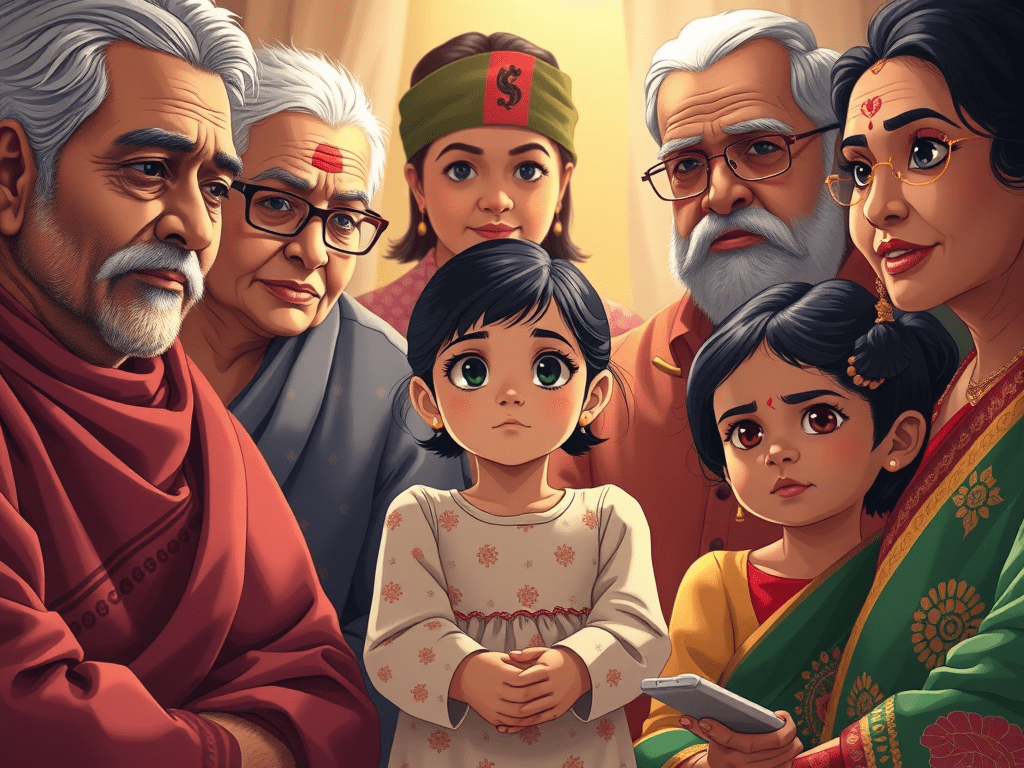
I always knew my family was different. While most kids grew up with siblings close in age, I was the baby of the family—by a lot. My sister was nearly 16 years older, and my brothers were even older than her. Instead of growing up with playmates, I was raised by what felt like four extra parents.
The first eight years of my life were golden. I was the pride and joy of the household, adored and doted on by everyone. Being the youngest, I was spoiled rotten, and for a while, I genuinely believed I could do no wrong.
My family’s story, though, began far from London. My parents and siblings were all born and raised in India. My father, a member of the Indian police force, came to the UK on a diplomatic assignment in 1969. What was supposed to be a short stay turned into a permanent move. He remained in the UK for a decade, eventually securing citizenship before bringing my mother and siblings over in 1979. I was born two years later.
From the stories I’ve heard, life wasn’t easy for my mum during those years apart. They lived in a rural village in Haryana, with no phones, no post office, and definitely no cars. It was the kind of place where camel carts were common, women covered their faces in front of elders, and running water was a luxury. Being a woman with a husband overseas and no clear communication must have been isolating. But somehow, my mum made it through, and the family was finally reunited.
Like many immigrant families, my parents brought their culture with them to the UK. Indian values shaped our home life, but what I didn’t understand as a child was how controlling my father could be. He wasn’t abusive, but his word was law. My mum rarely left the house and never learned to read or speak English, even though other women in the community were integrating and working. Still, she seemed content—my father and brothers earned enough to support the household.
My siblings carved different paths. My sister, I later learned, attended school briefly, defying norms by wearing trousers instead of the skirt required by her uniform. I remember her running a shop in London, and she’s been in retail ever since. My brothers took more hands-on routes—one in a furniture factory, the other helping at my dad’s Indian restaurant.
As a kid, though, I didn’t care what anyone did for work. I just wanted to play. My younger brother and I were especially close. He let me ride between his legs on his skateboard, we had epic snowball fights, and he showed off his nunchuck skills like a mini Bruce Lee. He was the cool older brother and easily my favorite.
My older brother, on the other hand, was a mystery. Quiet and reserved, he faded into the background—especially around Dad. I don’t even remember him sitting at the dinner table when Dad was there. It wasn’t until I was nearly 20 that I began to understand the subtle hierarchy and tensions that existed in our home.
Despite our conservative upbringing, there were odd exceptions. No one forced me into the kitchen or told me I had to cook. My sister and I were both tomboys—something my dad may not have loved, but tolerated. We also broke with certain traditions, like eating meat, though beef was always off-limits due to Hindu beliefs.
I was a fussy eater, living mostly on plain bread and Hula Hoops crisps until I was eight. My mum didn’t cook much Indian food—maybe because she was used to open-fire cooking back home and never adapted to kitchen appliances here. Whatever the reason, I was content. I was adored, and that was enough.
But everything changed the summer I turned eight.
In 1989, both my brothers got married in India. I was still the center of attention—this British girl in fancy Western clothes speaking Hindi with a London twang. I remember being paraded around, people marveling at the “girl born in London.” It was overwhelming and, honestly, scary.
I have two vivid memories from those weddings: riding the ceremonial horse with my brother and refusing to leave the stage during the ceremony. I was still Dad’s little star, after all.
But when we returned home, things began to shift. I adored my new sisters-in-law at first—especially Chitra, my eldest brother’s wife. She was warm, gentle, and maternal. Abhilasha, my younger brother’s wife, was just 16—only nine years older than me. Her immaturity and desire to be loved like a daughter clashed hard with the reality of being a daughter-in-law in an Indian household.
She saw how Dad treated me—the baby of the family, his pride—and resented it. And that resentment turned into jealousy, which eventually turned into bullying. She couldn’t challenge my parents directly, so she took it out on me. That marked the beginning of what became a 25-year cycle of emotional manipulation and belittling.
Looking back, my childhood was equal parts joyful and complicated. I grew up loved, yes, but also in the shadow of cultural expectations, silent tensions, and roles we never asked for—but had to play anyway.
Discover more from Breaking Free
Subscribe to get the latest posts sent to your email.
 Breaking Free